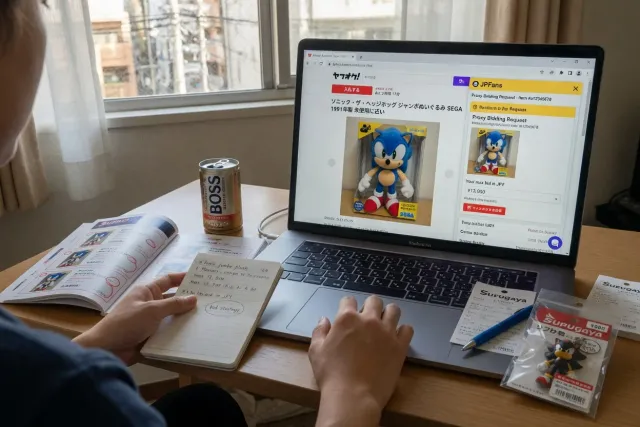
To bid on Yahoo! Auctions Japan from overseas, find an eligible listing through JPFinds, review the translated auction details and fees, set your maximum bid, and submit it before the auction ends. If you win, you complete the first payment for the item and applicable Japan-side costs; once the item reaches the warehouse, you choose and pay for international shipping.
How Yahoo! Auctions Japan bidding works
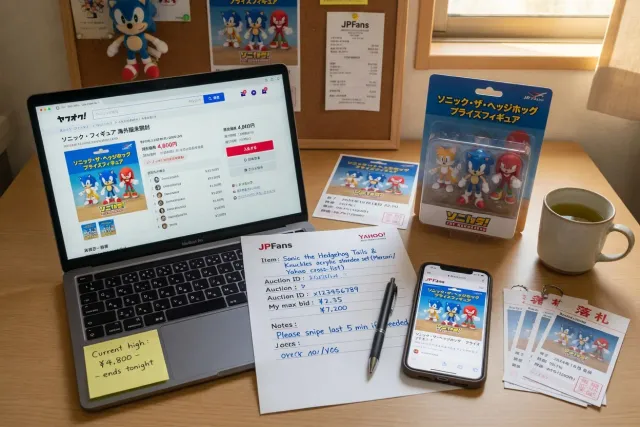
Yahoo! Auctions Japan is one of Japan’s largest auction marketplaces, with individual sellers, specialist shops, and businesses listing everything from collectibles and fashion to electronics, hobby items, books, and vehicle-related parts. Unlike a fixed-price listing, an auction has a scheduled closing time and a current high bid. The highest valid bidder when the auction closes wins.
International shoppers generally cannot participate directly because many Japanese marketplace features require a local account, Japanese payment method, and domestic delivery address. JPFinds acts as your shopping proxy: you browse live listings, place a bid through the JPFinds interface, and JPFinds handles the domestic transaction and delivery to its Japanese warehouse.
The auction platform is operated within Yahoo Japan’s services. For background on the company behind the service, visit the official Yahoo Japan homepage.
There are three figures to keep separate while bidding:
- Current bid: the amount currently leading the auction.
- Your maximum bid: the highest amount you authorize JPFinds to bid up to on your behalf.
- Your total purchase cost: your winning bid plus any applicable marketplace, domestic delivery, payment, and proxy-related charges, followed later by international shipping.
A low current bid does not necessarily mean an item will remain cheap. Many experienced auction users wait until the final minutes before bidding, so decide your true limit before you enter the auction.
Create a bidding plan before you place a bid
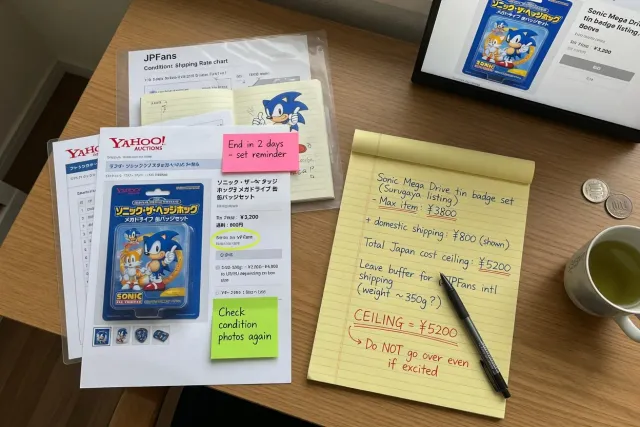
The most useful preparation happens before you click the bid button. Auction excitement can cause buyers to focus on ·winning· rather than on whether the final cost still makes sense. Set a ceiling based on the complete cost you are comfortable paying, not only the item price shown on the listing.
Calculate a realistic maximum
Start with the maximum item price you would pay. Then leave room for Japan-side costs shown or indicated on the listing, such as domestic shipping. Finally, remember that international shipping is paid after the item arrives at the JPFinds warehouse and is packed for dispatch. The final shipping amount depends on factors such as the parcel’s packed weight, dimensions, destination, selected carrier, and whether you consolidate it with other purchases.
For example, if your all-in budget is ·12,000 before international shipping and you expect ·800 in domestic delivery and other displayed costs, do not set a ·12,000 maximum bid. Your bid limit should leave enough margin for those additional charges.
Read the listing, not just the title
Auto-translation is useful, but auction descriptions can contain important condition notes, exclusions, or seller instructions. Check the photos, stated quantity, size, included accessories, shipping method, and any visible warning language. A listing headline may describe a product family while the description clarifies that only one part, empty box, or replacement component is included.
For collectible searches, condition terms can be particularly helpful. 未開封 usually means unopened, 美品 generally means a very good-looking item, and 初版 means first edition or first printing. These are seller descriptions rather than universal guarantees, so compare them with the photographs and full text.
Find the right listing and check its auction details
Search through JPFinds using English terms, Japanese product names where available, model numbers, franchise names, or manufacturer names. Exact model numbers are often more reliable than broad English phrases, especially for electronics, camera equipment, tools, and limited merchandise. Open several similar listings before bidding to understand the normal price range and identify unusual terms.
Each auction should be checked for the following details:
- End date and time: confirm how much time remains and account for the displayed time zone.
- Current price and bid count: a low price with many watchers or bids may rise quickly near the end.
- Starting price: some sellers begin at ·1, while others start close to the desired sale price.
- Buy It Now option: certain listings may allow an immediate purchase at a stated amount instead of waiting for the auction to finish.
- Domestic shipping: determine whether the seller charges postage and whether the amount is fixed, estimated, or calculated later.
- Item location: remote domestic locations can affect handling or domestic shipping arrangements.
- Seller feedback and description: look for clear photos, a consistent description, and signs that the seller understands the item.
Be cautious with vague descriptions, stock photos used for a supposedly used item, incomplete accessory lists, or unusually low prices for sought-after goods. These do not automatically mean a listing is unsuitable, but they are reasons to slow down and read more carefully.
If you are browsing character merchandise, figures, games, or vintage collectibles, JPFinds also has a dedicated Sonic the Hedgehog shopping hub that can help you discover relevant Japan listings across supported stores and marketplaces.
Place a maximum bid through JPFinds
Once you have chosen a listing and established your limit, enter the maximum amount you are willing to pay for the item itself. Do not assume this is the amount you will definitely pay. Auction systems commonly raise the active bid only as needed to keep you in the lead, up to your stated maximum, subject to the auction’s bidding rules and competing bids.
For instance, suppose the current bid is ·3,000 and your maximum is ·6,000. If another bidder’s maximum is ·4,200, you may win at an amount slightly above that competing bid rather than at your full ·6,000. If another bidder has already set a maximum above ·6,000, your bid will not become the highest.
Before confirming, review these points:
- Make sure you entered the amount in Japanese yen, not your home currency.
- Confirm that the listing is the exact version, quantity, color, or lot you intend to buy.
- Check whether the bid is binding once submitted.
- Ensure your JPFinds balance or payment arrangement supports the bid amount required by the service.
- Use your pre-set ceiling; do not increase it simply because another bidder has challenged you.
Auction bids generally cannot be casually withdrawn after submission. Treat the confirmation step as a purchase commitment if you win. This is especially important for bundle listings, large items, and auctions with substantial domestic shipping charges.
Understand last-minute bids and automatic extensions
Yahoo! Auctions Japan can be competitive in the final minutes. It is common for bidders to watch an auction without bidding until close to the end. This approach is often called ·sniping,· although waiting until the last seconds is not always effective because many Japanese auctions use an automatic extension feature.
When automatic extension applies, a bid placed near the scheduled end can extend the closing time. The exact extension behavior can vary by listing settings and platform rules, so do not assume that the original closing time is final. Keep monitoring the auction after a late competing bid rather than assuming it has ended.
Choose a bidding strategy that fits your budget
There are two sensible approaches. The first is to place your honest maximum early and let the system bid incrementally for you. This avoids hurried decisions and makes your budget clear. The second is to watch the auction and bid later, but only with a fixed maximum already decided. Neither approach guarantees a win; the best strategy is the one that prevents you from spending more than the item is worth to you.
Do not repeatedly raise your maximum in small emotional increments. If the price passes your planned ceiling, letting the item go is often the right result. Similar listings may appear later, particularly for regularly released merchandise and common hobby goods.
What happens after you win an auction
After you win, JPFinds proceeds with the domestic purchase process. The first payment covers the winning item amount and applicable charges associated with obtaining it in Japan, as shown by JPFinds. Follow the payment instructions promptly so the order can proceed without avoidable delay.
The seller sends the item to the JPFinds warehouse. Once it is available there, you can manage it alongside other purchases and choose an international shipping method. This is the second-payment stage, which covers international shipping and any applicable shipping-related options or charges. Consolidating several eligible purchases into one shipment may reduce repeated parcel costs, but it can also increase parcel size or weight, so compare the available options.
Use the warehouse stage to review the shipment choices offered for your destination. Carrier availability, limits, pricing, and customs procedures differ by country. You are responsible for providing accurate recipient information and for understanding import duties, taxes, and local restrictions that may apply at destination.
For fans building a themed order, you can browse more Japanese marketplace finds through the Sonic the Hedgehog collection page.
Avoid common Yahoo! Auctions Japan bidding mistakes
- Bidding based on the opening price: assess likely final value, not only the current amount.
- Ignoring domestic shipping: a low winning bid can become less attractive when seller postage is added.
- Missing lot quantities: ·set,· ·junk,· ·parts,· and ·for repair· listings require close reading.
- Assuming all accessories are included: check photos and description for boxes, manuals, cables, stands, and bonus items.
- Forgetting currency conversion: use a comfortable buffer for exchange-rate movement and payment costs.
- Overbidding in the final minutes: decide your ceiling before the pressure of an active auction.
- Not checking import rules: some categories may face restrictions or additional charges in your country.
The strongest bidders are not necessarily those who win the most auctions. They are the buyers who understand the listing, account for the full cost, and place a deliberate maximum bid.
Frequently asked questions about bidding on Yahoo! Auctions Japan
Can I bid on Yahoo! Auctions Japan from outside Japan?
Yes. Through JPFinds, overseas customers can place bids on eligible Yahoo! Auctions Japan listings without needing to arrange a Japanese domestic delivery address themselves.
Do I pay my maximum bid immediately?
Your maximum is the highest amount you authorize for the auction. If you win, the amount due is based on the final winning bid plus applicable charges, not necessarily the full maximum you entered.
Why did the auction end later than the listed time?
A late bid may trigger an automatic extension on eligible auctions. Continue monitoring the listing after the scheduled end if bidding activity occurs near closing.
Can I cancel a Yahoo! Auctions Japan bid?
Bids should be treated as binding. Review the listing and your amount carefully before submission, as cancellations may not be possible once a bid has been placed.
What is the difference between the first and second payment?
The first payment covers the item purchase and applicable Japan-side charges. The second payment is made after warehouse arrival and covers international shipping and applicable shipping-related costs.
How can I keep my auction costs under control?
Set an all-in budget before bidding, subtract expected Japan-side costs from it, use the remaining figure as your item bid limit, and avoid raising that limit during the auction.