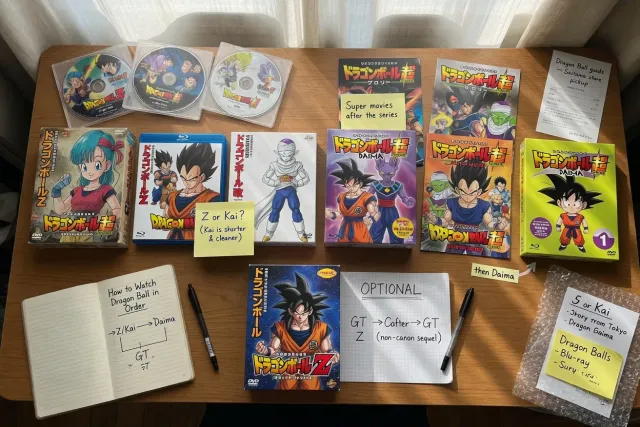
The simplest way to watch Dragon Ball in order is to begin with Dragon Ball, continue with Dragon Ball Z or Dragon Ball Z Kai, then watch Dragon Ball Super, its two follow-up films, and Dragon Ball Daima. Add Dragon Ball GT after Z as an optional alternate sequel. Movies and TV specials are best treated as extras rather than required viewing.
The best Dragon Ball watch order for first-time viewers
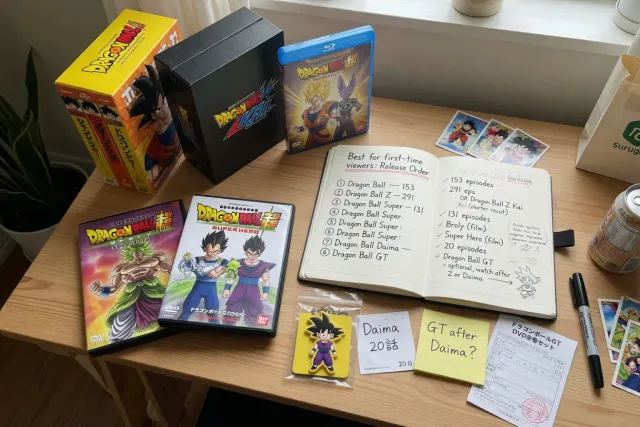
For most viewers, release order is the best Dragon Ball watch order. It introduces Goku, his friends, the world’s rules, and major transformations in the way audiences originally encountered them. It also avoids revealing later developments before their emotional setup has happened.
- Dragon Ball · 153 episodes
- Dragon Ball Z · 291 episodes or Dragon Ball Z Kai · a shorter recut of the Z story
- Dragon Ball Super · 131 episodes
- Dragon Ball Super: Broly · film
- Dragon Ball Super: Super Hero · film
- Dragon Ball Daima · 20 episodes
- Dragon Ball GT · optional alternate continuation, ideally watched after Z or after Daima
This order is designed for enjoyment, not strict in-universe chronology. Daima is set earlier in the timeline than Super, but watching it after Super gives a new viewer more context for its place in the franchise and lets the original series progression remain intact.
If you are building a display around the series while you watch, explore the Dragon Ball collection on JPFinds for Japanese releases and character goods connected to different eras of the anime.
Start with Dragon Ball, not Dragon Ball Z
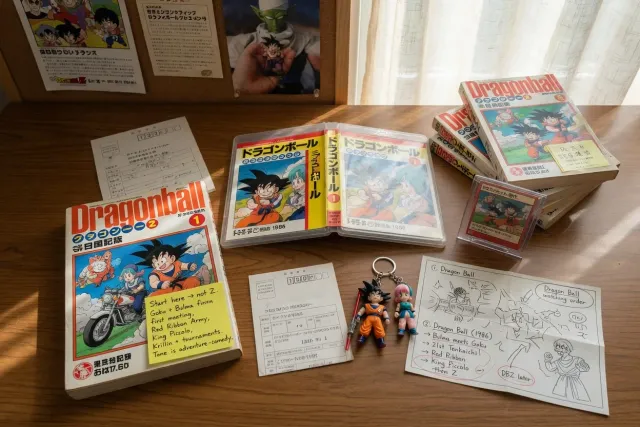
Although Dragon Ball Z is the entry many international fans remember first, Dragon Ball is the true beginning. It follows young Goku from his first meeting with Bulma through the early martial arts tournaments, the Red Ribbon Army storyline, King Piccolo, and the events that establish the characters and rivalries central to Z.
Starting here makes later moments land more effectively. You see why Krillin is Goku’s closest friend, how Yamcha and Tien became allies, why Piccolo’s role changes so dramatically, and how the Dragon Balls work before the stakes become cosmic. The original series also has a noticeably different adventure-comedy tone, with folklore-inspired quests and martial arts comedy alongside serious action.
Do not skip the original show simply because it looks older. Its pacing can feel more episodic than later installments, but it is essential context rather than filler. It also establishes the original manga’s basic narrative rhythm: a journey, a training period, a tournament, and a new threat.
The three early theatrical Dragon Ball films are optional. They remix or reinterpret ideas from the first anime rather than fitting neatly into its episode-by-episode continuity. Watch them after finishing the original series if you want more of its early-era atmosphere, but do not insert them into a first viewing as required chapters.
Choose between Dragon Ball Z and Dragon Ball Z Kai
After the original Dragon Ball, you have two primary ways to experience the same major story: Dragon Ball Z and Dragon Ball Z Kai. Both cover the arrival of Raditz through the defeat of Majin Buu, adapting the latter portion of Akira Toriyama’s original manga.
Watch Dragon Ball Z if you want the classic television experience
Dragon Ball Z is the full-length 291-episode version and remains the cultural reference point for much of the franchise. It includes extended battles, anime-original scenes, a larger amount of filler, and the familiar music and pacing many longtime viewers associate with the series.
Choose Z if you enjoy a slower weekly-anime rhythm, want to experience the famous scenes in their original televised form, or are interested in episodes that expand the world even when they are not from the manga. The Other World Tournament and the Great Saiyaman material, for example, can be enjoyable additions when approached as anime-specific side material.
Watch Dragon Ball Z Kai if you prefer a faster route through the main story
Dragon Ball Z Kai recuts Z to follow the manga more closely. It removes much of the filler, tightens repeated footage and long reaction sequences, and uses a revised script and voice recording in many versions. The exact episode count and presentation can differ by region, especially for the final Buu material, but the purpose is consistent: a more streamlined version of Z.
For a first-time viewer who wants the essential plot with less repetition, Kai is usually the practical recommendation. Do not watch both Z and Kai back to back; select one. You will still understand everything necessary for Super, Daima, and the modern films.
Where Dragon Ball movies and TV specials fit
Dragon Ball has many movies, TV specials, and promotional episodes, but they do not all occupy the same continuity. The easiest approach is to keep your main series moving, then use films as optional bonuses after the arc or show that gives them the most context.
Optional Dragon Ball Z films
Most older Z movies were produced as self-contained theatrical adventures. They often assume a particular version of the cast’s powers and relationships, but they can conflict with the exact timeline of the television series. This is why trying to place every one of them between specific episodes can become frustrating.
A viewer can watch the older Z films after finishing Z or Kai with no confusion. If you prefer approximate placement, Dead Zone works best near the beginning of Z, while films featuring Super Saiyan Goku, Cell-era characters, or Gohan in his school years should wait until after the corresponding television arcs. Treat these placements as flavor, not as strict canon chronology.
The TV specials Bardock: The Father of Goku and The History of Trunks are also worthwhile extras. The Trunks special is particularly effective after the Android and Cell material, because it expands on the future timeline that becomes important there.
The modern films that matter most
Dragon Ball Z: Battle of Gods and Dragon Ball Z: Resurrection ·F· introduced story elements later retold at the beginning of Dragon Ball Super. If you watch the Super television series, you can skip those two films without missing the basic plot, since the anime adapts both stories. Many fans still prefer the films· pacing, so watching the movies instead of Super’s early retellings is a reasonable alternative.
After finishing the Tournament of Power in Dragon Ball Super, watch Dragon Ball Super: Broly. Then watch Dragon Ball Super: Super Hero. These two films continue the modern branch and are the most important movies for viewers following the current story world.
For official franchise news and announcements, consult the official Dragon Ball website. Production and distribution information may vary between regions, so use official local streaming and home-video listings when checking availability.
How Dragon Ball Super, Daima, and GT connect
This is the point where a Dragon Ball watch order can seem confusing, because the franchise has multiple continuations and stories set in different parts of the timeline. The key is to separate timeline placement from recommended viewing order.
Dragon Ball Super
Dragon Ball Super takes place after the Majin Buu storyline in Z and before the ending sequence of Z featuring the adult Uub. It begins by revisiting the events of Battle of Gods and Resurrection ·F·, then moves into original arcs involving Universe 6, Future Trunks, the Tournament of Power, and new gods and universes.
Watch Super after Z or Kai. Its tone often shifts between comedy and high-stakes action, but it directly builds on the characters and world introduced in Z. The two modern Super films belong after the television anime, as listed above.
When does Dragon Ball Daima take place?
Dragon Ball Daima is set after the defeat of Majin Buu and before the events of Dragon Ball Super. Its premise transforms Goku and several allies into smaller versions of themselves and sends them into a new adventure connected to the Demon Realm.
For a strict timeline order, you would watch Daima immediately after Z or Kai and before Super. For a first-time release-oriented order, it is still sensible to watch it after Super and its films. Either choice works, provided you have already completed Z or Kai.
Is Dragon Ball Daima canon?
Dragon Ball Daima was developed with Akira Toriyama’s direct involvement in its story and character work, which gives it a stronger official creative connection than many older anime-only productions. Fans may use the word ·canon· differently, especially when comparing anime, manga, films, and alternate continuities. The most useful viewing answer is simple: Daima is an official Dragon Ball story and belongs in a complete modern watch-through after Z or Kai.
Is Dragon Ball GT canon?
Dragon Ball GT is an official Toei Animation sequel series, but it was not adapted from Toriyama’s original manga and is generally treated separately from the later Super continuity. It follows Goku, Pan, and Trunks on a space journey before moving into the Baby, Super 17, and Shadow Dragons storylines.
GT is absolutely worth watching if you want more Dragon Ball, enjoy alternate sequel ideas, or want to understand references to Super Saiyan 4. Just do not expect it to lead directly into Super. Watch it after Z or Kai, or save it until after Daima if you want to finish the modern material first.
A chronological Dragon Ball watch order
If your priority is in-universe chronology rather than release order, use the list below. This route is best for returning viewers who already know the characters and want to see the internal timeline in sequence.
- Dragon Ball
- Dragon Ball Z or Dragon Ball Z Kai
- Dragon Ball Daima
- Dragon Ball Super
- Dragon Ball Super: Broly
- Dragon Ball Super: Super Hero
- Dragon Ball GT as an alternate, non-Super continuation
The original ending of Z is set further ahead than the main events of Super and Daima. That is why a purely chronological list can feel slightly unusual if you are watching the full final episodes of Z before beginning these newer stories. This is not an error; it reflects how later productions expanded a gap in the timeline that the original anime had already moved beyond.
Older movies and specials remain optional in this route. Because many do not fit cleanly between series episodes, placing them at the end of the relevant show is usually more satisfying than interrupting an ongoing arc to force a timeline slot.
What to skip, what to save, and how to avoid spoilers
A complete Dragon Ball journey is long, so it helps to decide what ·complete· means to you. The core viewing path is Dragon Ball, one version of Z, Super, the two modern Super films, and Daima. Everything else can be enjoyed later.
- Do not skip Dragon Ball: it is foundational, not a prequel.
- Choose Z or Kai: watching both is optional and repetitive for a first viewing.
- Save GT for later: it works better when you understand that it is a separate sequel path.
- Save older movies until after their related series: this prevents timeline debates from getting in the way of the story.
- Watch Broly before Super Hero: this is the clearest order for the modern films.
- Avoid character searches: image results, figure packaging, and video titles can reveal transformations, fusions, and major deaths surprisingly early.
Watching in order also makes collecting more meaningful, because each saga develops its own visual identity — from the original martial arts uniforms to Saiyan armor, Namek-era designs, and the modern Super cast. Browse the Dragon Ball hub when you are ready to explore items tied to the series you have reached.
Related guides: for more background on the franchise, see official updates from Toei Animation.