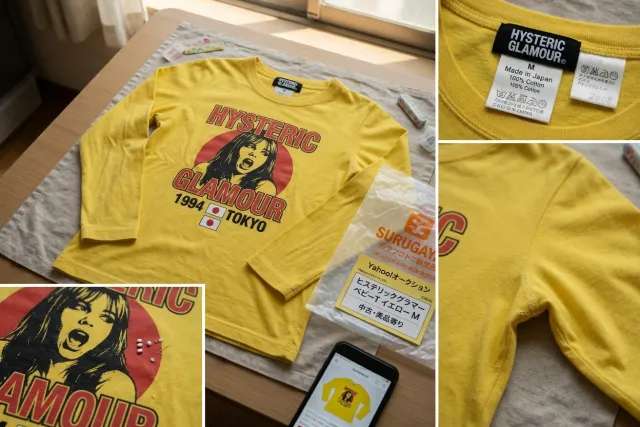
To review used Hysteric Glamour listings well, verify the exact item first, then compare the written condition notes with clear photos, measurements, labels, graphics, hardware, and included accessories. Treat each listing as a set of evidence rather than relying on one phrase such as ·good condition.· Older Hysteric Glamour pieces can vary widely in fit, wear, and construction, so careful comparison matters.
Identify exactly what the listing is offering
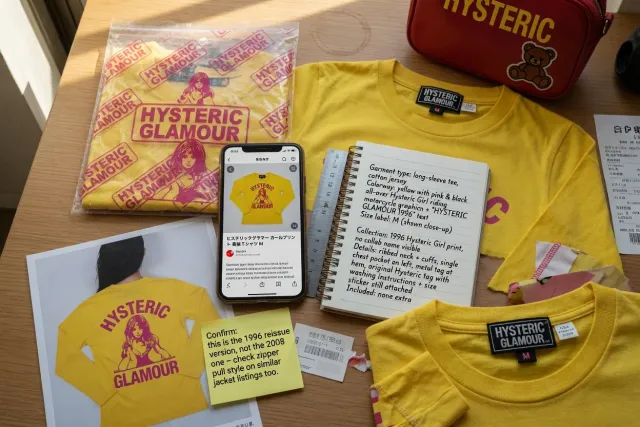
Before judging condition, establish the item’s identity. Hysteric Glamour has produced denim, leather, knitwear, military-inspired jackets, graphic tees, bags, jewelry, toys, novelty goods, and collaborations across many years. A listing title may be brief, auto-translated, or focused on a recognizable motif rather than the formal product name.
Start by recording the details visible in the listing:
- Garment type and apparent material
- Colorway and graphic, patch, embroidery, or all-over print
- Size shown on the label
- Collection clues, collaboration names, or model references
- Distinctive construction details, such as zipper pulls, snaps, lining, or pocket arrangement
- Included components, such as tags, detachable hoods, belts, boxes, dust bags, or charms
This first step prevents a common mistake: comparing a listing to a similar-looking but different release. For example, two black Hysteric Glamour zip hoodies can have different fabrics, prints, sizing, or eras. If the seller calls an item ·rare· but the photos do not show enough identifying features, regard rarity as unverified until you can match the item to reliable reference images.
The HYSTERIC GLAMOUR collection on JPFinds can also help you compare current listing photos, recurring motifs, and item categories across Japanese marketplace sources. Use comparison listings as visual context, not as proof that two items are identical.
Read Japanese listing titles and condition language carefully
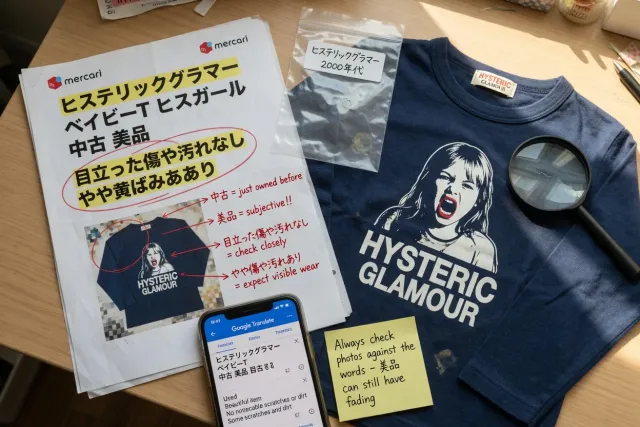
Japanese secondhand listings often place the most useful details in the title, condition field, and photo captions. Auto-translation is helpful, but certain resale terms are broad and should always be checked against the images.
Common condition terms and what they usually mean
- 中古 · Used. This only confirms prior ownership; it does not describe how much wear is present.
- 美品 · Literally ·beautiful item· or very good condition. It is subjective and may still include light wear, minor fading, or small marks.
- 目立った傷や汚れなし · No noticeable scratches or stains. Look closely because ·noticeable· is a personal judgment.
- やや傷や汚れあり · Some scratches or stains are present. Expect visible wear and find every affected area in the photos.
- 傷や汚れあり · Scratches or stains are present. Review this category conservatively, especially for light-colored garments and printed pieces.
- 使用感あり · Signs of use. This can include fading, fabric softening, pilling, stretched ribbing, or worn hardware.
- 色褪せ · Color fading. Important for black tees, denim, red garments, and sun-sensitive prints.
- 毛羽立ち · Fuzzing or surface abrasion, often found on jersey, fleece, knitwear, and cuffs.
- プリント割れ · Cracking in a print. Small cracks may be expected on older graphic tees, but broad cracking can affect the overall look.
- 未開封 · Unopened. This is most relevant to sealed accessories, novelty items, and packaged collectibles; check whether the outer package itself has wear.
Descriptions may contain important qualifiers such as ·please understand this is a used item,· ·there may be overlooked flaws,· or ·photos are prioritized.· These statements do not automatically mean the item is poor, but they are reminders to judge the visible evidence yourself. When text and photos conflict, give greater weight to clear, detailed photos.
Inspect photos in a deliberate order
Good listing photos should let you assess both the overall appearance and high-wear areas. Begin with the full front and back views, then move to close-ups. If only one distant photo is provided, you cannot confidently confirm condition, fabric texture, or label details.
For clothing, check the areas most likely to show wear
- Collar and neckline: Look for yellowing, makeup transfer, stretched ribbing, seam separation, or fading.
- Underarms: Check for deodorant residue, discoloration, odor-related staining, fabric thinning, and abrasion.
- Cuffs and hems: Examine for pilling, stretched elastic, fraying, cracking, and loss of shape.
- Prints and embellishments: Look for peeling ink, cracks, missing rhinestones, lifted patches, loose embroidery, and uneven fading.
- Denim and trousers: Inspect the seat, knees, inner thighs, fly, belt loops, and hems for abrasion, repairs, or altered length.
- Leather: Look for dryness, scuffs, color transfer, flaking coating, creases, edge wear, and oxidation around metal fittings.
For bags and accessories, inspect corners, handles, straps, closures, interior lining, and metal hardware. A bag can look excellent from the front while having edge wear or interior deterioration that changes its practical condition. For jewelry and small accessories, request enough visual detail to assess missing stones, plating wear, clasp function, engraving, and tarnish.
Also consider photo quality. Heavy filters, very warm lighting, overexposure, or photos taken from far away can hide color variation and flaws. Natural or neutral light is generally easier to assess. A single stock image should never be treated as evidence of the actual used item’s condition.
Compare measurements instead of relying on the tagged size
Hysteric Glamour sizing can differ by era, garment category, cut, and intended silhouette. A tagged size M may fit very differently from another M, particularly with vintage tees, slim denim, fitted women’s pieces, or Japanese-market outerwear. Review measurements before deciding whether the item is likely to fit your intended look.
For tops and jackets, useful measurements include:
- Shoulder width
- Chest width measured pit to pit
- Length from the highest shoulder point
- Sleeve length
- Hem width for fitted or elasticated garments
For pants, look for waist, rise, inseam, thigh width, hem width, and total length. For skirts and dresses, check waist, hip, length, and, where relevant, shoulder-to-waist measurements. Compare the listing measurements with a similar item you already own and like, measured flat in the same way.
Be alert to alterations. Terms such as 裾上げ indicate hemming, while repairs may be described as リペア. Alterations are not necessarily negative, but they can change original proportions and resale comparability. A shortened inseam, replaced zipper, or repaired seam should be considered part of the item’s actual condition.
Assess labels, construction, and authenticity signals
A listing review cannot provide absolute authentication from photos alone, but it can help you identify whether the available evidence is coherent. Hysteric Glamour has used different labels, branding formats, and design conventions over time. The key is not expecting every authentic item to have one identical label; it is checking whether the label, materials, construction, and graphic treatment make sense together.
Look for photos of the neck label, care label, size label, and any branded hardware. Useful details can include clean stitching, appropriate fabric composition information, consistent typography, secure logo patches, and hardware that appears correctly finished for the item. On printed garments, examine linework, color placement, ink texture, and alignment around seams.
Be cautious if a listing has several warning signs at once: no label photos, cropped graphics, inconsistent logo lettering, vague condition text, a price that seems unusually low for the claimed item, or seller photos copied from unrelated sources. One missing detail may have an innocent explanation; multiple gaps justify a more conservative decision.
For brand context and current official presentation, consult the official HYSTERIC GLAMOUR website. Official imagery can be useful for comparing logo use and recurring design language, although vintage pieces may not appear in current collections.
Judge condition by impact, not by the seller’s overall rating
Condition should be evaluated according to how a flaw affects the item you are reviewing. A tiny mark inside a leather jacket may have little practical impact, while a small stain across a white graphic tee can be highly visible. Likewise, gentle fading may suit a worn-in vintage look, but stretched cuffs or a damaged zipper can affect wearability.
Create a short condition summary in your own words after reviewing the listing. For example: ·Black cotton tee with light overall fading, visible print cracking at the center, intact neck ribbing, and no clear underarm stains in the available photos.· This helps separate what is actually shown from broad labels such as 美品.
Pay particular attention to whether the seller has photographed disclosed damage. A transparent listing typically shows flaws clearly and describes their location. If a description mentions stains, repairs, or fading but the photos do not reveal them, assume the condition may be harder to assess than the summary suggests.
Condition details that deserve extra caution
- Smoke, fragrance, storage odor, or pet-related notes, because these are difficult to assess visually
- Vintage polyurethane, faux leather, coated fabric, or foam-backed materials that may degrade with age
- Rubberized prints and synthetic embellishments that can crack, become sticky, or detach
- White, pale, or fluorescent fabrics where yellowing and color transfer can be difficult to photograph
- Items described as ·junk,· ·as-is,· or intended for parts, repair, or display
Confirm completeness for accessories, novelty goods, and sets
Hysteric Glamour’s appeal extends beyond apparel, and smaller items often require a different review method. For boxed goods, accessories, dolls, branded novelty products, or collaboration pieces, determine exactly what is included. A listing photo may show a box, tag, chain, pouch, or stand that is not necessarily part of the sale unless the description confirms it.
Check whether the item includes original packaging, detachable parts, authentication cards where applicable, spare hardware, manuals, or branded bags. ·Main item only· wording generally means extras are absent. If a collectible is described as 未開封, inspect photos for crushed corners, tape changes, discoloration, moisture marks, or sun fading on the package.
For sets, count the pieces visible and compare that number with the description. A missing charm, strap, belt, insert, or original box may not matter to every buyer, but it should be an intentional trade-off rather than an overlooked omission.
Use a final evidence checklist before proceeding
The strongest used Hysteric Glamour listings make it easy to answer practical questions: what the item is, what size it measures, where it shows wear, and what is included. If you cannot answer those points from the listing, the item may still be interesting, but the uncertainty should influence your decision.
- Does the item identity match the photos, labels, and description?
- Are there clear front, back, label, and close-up condition photos?
- Have you checked measurements against a garment that fits you well?
- Do the stated flaws match what you can see?
- Are prints, hardware, seams, and high-wear areas sufficiently documented?
- Is every included accessory or package component clearly identified?
- Are there enough authenticity signals to make the listing feel internally consistent?
When comparing several options, choose the listing with the clearest evidence rather than simply the most flattering title. A well-photographed item with honestly disclosed wear is usually easier to assess than a vaguely described ·excellent condition· piece with limited images. Browse more HYSTERIC GLAMOUR listings to build a stronger visual reference for fabrics, logos, cuts, and condition patterns.