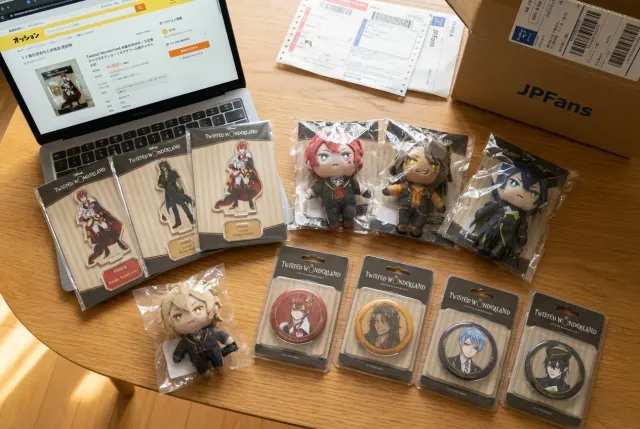
To find Twisted Wonderland goods on Japanese marketplaces, search with Japanese series, dormitory, and character names rather than English terms alone. Check several product-word variations, filter by condition and price, and compare photos before choosing a listing. Japanese marketplaces are especially useful for discontinued event merchandise, character-specific items, and older collaboration releases.
Start with the right Twisted Wonderland search terms
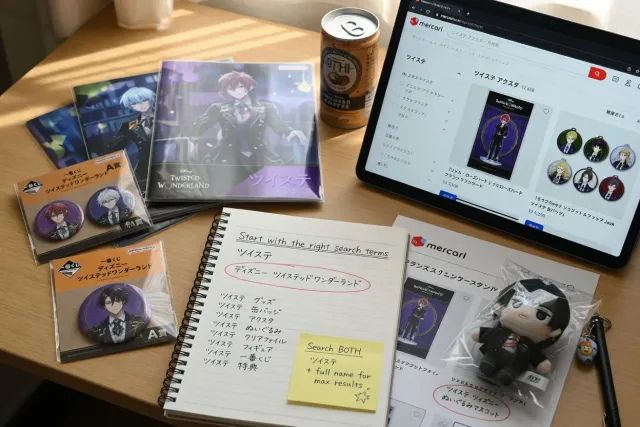
The most important step is searching in Japanese. While some listings include English titles, sellers usually describe Disney Twisted-Wonderland merchandise using the Japanese abbreviation ツイステ (Tsuisute) or the full title ディズニー ツイステッドワンダーランド. Searching both catches a wider range of results.
Begin with broad searches, then add details as you identify the type of merchandise you want. For example:
- ツイステ グッズ · general Twisted Wonderland goods
- ツイステ 缶バッジ · can badges / pin badges
- ツイステ アクスタ · acrylic stands
- ツイステ ぬいぐるみ · plush items
- ツイステ クリアファイル · clear files
- ツイステ フィギュア · figures
- ツイステ 一番くじ · Ichiban Kuji prize goods
- ツイステ 特典 · bonus, benefit, or purchase bonus items
For a large selection of listings gathered from Japanese stores and marketplaces, start at the Twisted Wonderland shopping hub. It is a useful starting point when you are still learning which product names and release lines are available.
Search by Japanese character name
Character names are often the fastest way to narrow a busy search. A seller may title an item with only the character name, especially when selling a single badge, card, acrylic stand, or plush from a blind-box set. Add the Japanese name after ツイステ, then add the merchandise type.
- リドル・ローズハート · Riddle Rosehearts
- レオナ・キングスカラー · Leona Kingscholar
- アズール・アーシェングロット · Azul Ashengrotto
- カリム・アルアジーム · Kalim Al-Asim
- ヴィル・シェーンハイト · Vil Schoenheit
- イデア・シュラウド · Idia Shroud
- マレウス・ドラコニア · Malleus Draconia
Use a shortened name too. For instance, searches such as ツイステ マレウス or ツイステ イデア アクスタ can surface listings that omit full names. Search spelling variations where relevant, since punctuation such as ・ may be missing from seller-entered text.
Use dormitory and group names to uncover overlooked listings
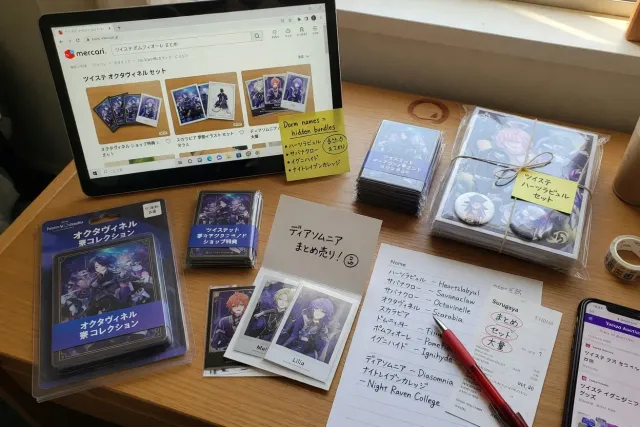
Not every seller organizes Twisted Wonderland goods under individual character names. Lots, display sets, and official collections are frequently labeled by dormitory. Searching dorm names is particularly effective for coordinated merchandise, such as trading cards, shop benefits, seasonal art, or complete dormitory sets.
- ハーツラビュル · Heartslabyul
- サバナクロー · Savanaclaw
- オクタヴィネル · Octavinelle
- スカラビア · Scarabia
- ポムフィオーレ · Pomefiore
- イグニハイド · Ignihyde
- ディアソムニア · Diasomnia
- ナイトレイブンカレッジ · Night Raven College
Try combinations such as ツイステ オクタヴィネル まとめ (Octavinelle bundle) or ツイステ ディアソムニア セット (Diasomnia set). The terms まとめ, セット, and 大量 indicate grouped items. Bundles can be efficient when you collect several characters or want to build a display, but read the description carefully: a set may include duplicates, opened blind-pack items, or characters outside your preferred group.
The official Japanese Disney Twisted-Wonderland website is also helpful for recognizing official announcements, visual styles, and collaboration names. Knowing the Japanese name of a campaign can make marketplace searching far more precise.
Match your search to the type of merchandise you collect
Japanese listings often use compact category terms. Learning these terms helps prevent a search for one format from being overwhelmed by unrelated goods. Add one or two product words to your series and character query rather than relying on ·goods· alone.
Common merchandise vocabulary
- 缶バッジ · can badge; a metal pin badge, often from trading sets
- アクリルスタンド / アクスタ · acrylic stand
- アクリルキーホルダー / アクキー · acrylic key holder or keychain
- ぬいぐるみ / ぬい · plush or plush mascot
- マスコット · small mascot plush or charm
- カード · card; add トレカ for trading-card-style items
- 色紙 · shikishi-style illustration board
- ブロマイド · bromide photo print
- ポストカード · postcard
- コースター · coaster, often from cafés or promotions
Some product types need extra specificity. For example, ツイステ 缶バッジ may return individual badges, unopened boxes, and large mixed lots. Add a character name for a single-character search, コンプ for a complete set, or BOX for a sealed retail box. For artwork from a particular promotion, use its event or retailer name alongside the product type.
Do not assume that every item described as ·card· is a gameplay card or that every ·mascot· is the same size. Marketplace titles are brief, so product dimensions, material, and included accessories should be confirmed from the photos and description.
Search beyond the newest listings and obvious categories
Twisted Wonderland has had merchandise from retail stores, cafés, prize lines, lottery releases, magazine bonuses, character birthdays, and collaborations. Older or niche items may not appear in a simple current-release search. Broaden the search gradually with Japanese collector terms that indicate an item’s origin.
- プライズ · arcade prize item
- 一番くじ · lottery prize release
- 購入特典 · purchase bonus
- ノベルティ · promotional novelty item
- 限定 · limited edition or limited distribution
- イベント · event item
- コラボ · collaboration
- 誕生日 · birthday release or birthday-themed goods
Try a structured query such as ツイステ マレウス 誕生日 缶バッジ or ツイステ 購入特典 オクタヴィネル. If you know a collection’s Japanese campaign title, place it between the series name and item type. This is often more productive than using a long English description.
Also try searches without ツイステ when the item is strongly associated with a character or event. Sellers occasionally omit the franchise name, especially in multi-series listings. In those cases, the character name plus a distinctive item term can reveal results that a broad series search misses.
Compare Japanese marketplace listings before you choose
Finding a listing is only the first part of the process. Identical-looking Twisted Wonderland goods can differ in condition, quantity, edition, and whether a key part is included. Compare at least a few listings when availability allows, especially for collectible items with many releases using similar artwork.
Read condition language accurately
Japanese condition terms are useful, but they do not replace reviewing every available photo. Common wording includes:
- 未開封 · unopened; usually refers to the outer package, but confirm what is actually sealed
- 美品 · item in very good condition; this is subjective, so inspect images for scratches or fading
- 中古 · pre-owned or used
- 傷あり · has scratches or damage
- 汚れあり · has stains or dirt
- 台座なし · acrylic stand is missing its base
- 外袋なし · outer bag is not included
For acrylic stands, confirm that both the figure piece and base are present. For plush, inspect the face embroidery, tags, and visible marks. For badges, look at the front art and check whether the reverse, pin, or rim appears bent or oxidized. For paper goods, watch for corner wear, creases, sun fading, and moisture damage.
Be cautious with listings labeled 現状品 (sold as-is) or ジャンク (junk/for repair), as these usually signal notable condition issues or missing parts. A lower price may be appropriate, but it should match what is shown and described.
Check authenticity, editions, and listing photos
Official franchise goods normally have recognizable manufacturer information, copyright text, branded packaging, or an official tag, depending on the item category. Compare the listing images with known official product announcements when an item’s origin is unclear. The goal is not to rely on a single clue, but to assess the entire listing: artwork quality, packaging, labeling, price, seller description, and included parts.
Terms such as 公式 (official), 正規品 (genuine product), and 非売品 (not for sale) can be useful search words, but they are seller statements rather than proof on their own. Likewise, 初版 may matter for a first printing or early release, but confirm why it is identified that way and whether the edition difference is actually relevant to your collection.
Review all photos rather than only the first image. A stock photo may be used for an unopened retail item, while photos of a pre-owned item should make its condition and contents understandable. If a listing combines several pieces, count them visually and compare the count with the written description. In Japanese, 画像のものが全てです means ·everything shown in the images is included,· which makes the photos especially important.
Extremely low pricing, blurred images, vague descriptions, or a mismatch between the title and photos are reasons to slow down and compare alternatives. For popular character goods, patience and saved search variations can be more useful than rushing to the first listing you see.
Organize your searches across Japanese stores and marketplaces
Different sources tend to surface different kinds of Twisted Wonderland merchandise. Person-to-person listings can be useful for single character items and mixed lots, auction-style listings may reveal older collections, and Japanese retailers may have pre-owned stock or remaining new merchandise. Searching more than one source prevents one platform’s pricing or inventory from becoming your only reference point.
Create a small search list for every collecting goal. Include the full series title, ツイステ, a character name, a dormitory name, and one or two item-type terms. For a targeted collection, add campaign names and terms such as 特典, 限定, or コラボ. Revisit searches periodically because individual listings and auction stock can change quickly.
When you find several suitable items, compare the total item cost, item condition, size, and whether they can be combined with other purchases. Consolidating purchases before international shipping can be practical for a growing collection, particularly when you are gathering lightweight goods from several Japanese sellers. Browse the Twisted Wonderland collection again whenever you want to expand from a character search into broader Japanese marketplace results.
A methodical approach — Japanese keywords first, specific product terms second, and careful listing review last — will help you locate merchandise that fits your collection rather than simply what happens to appear in an English-language search.
Frequently asked questions about finding Twisted Wonderland goods
What is the best Japanese keyword for Twisted Wonderland merchandise?
Use ツイステ グッズ for a broad search. Also try the full title, ディズニー ツイステッドワンダーランド, especially when looking for formal product listings or older releases.
How do I search for goods from one Twisted Wonderland character?
Search ツイステ plus the character’s Japanese name and product type, such as ツイステ レオナ 缶バッジ. A shorter name often finds listings that do not include the full name.
What does アクスタ mean in Twisted Wonderland listings?
アクスタ is short for アクリルスタンド, meaning an acrylic stand. Check photos to ensure the stand base is included, as some pre-owned listings may be missing it.
How can I find limited or bonus Twisted Wonderland items?
Add terms such as 限定 (limited), 特典 (bonus), 購入特典 (purchase bonus), or ノベルティ (promotional item) to your series, character, or dormitory search.
What should I check before choosing a pre-owned Twisted Wonderland listing?
Read the full description, review every photo, verify the quantity and included parts, and look for condition wording such as 未開封, 美品, 傷あり, or 台座なし. Compare similar listings so you understand the usual condition and price range.