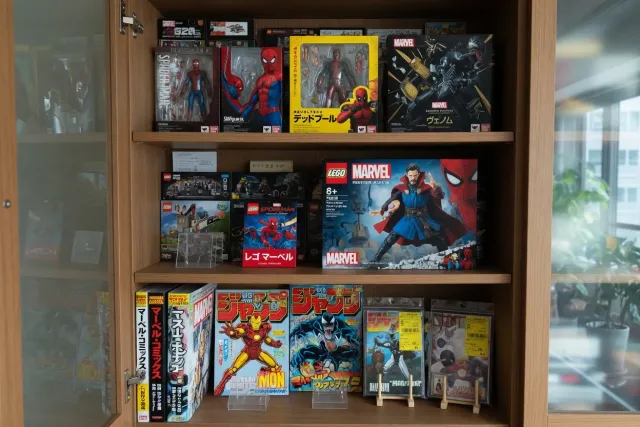
To find Japanese Marvel figures, LEGO sets and comics, search with both English and Japanese product names, then compare listing photos, edition details and condition terms before choosing an item. Japanese marketplaces can be especially useful for Japanese-exclusive releases, imported American collectibles, older toys, magazine supplements and Japanese-language comic editions that are harder to spot through English-only searches.
Why search Japan for Marvel collectibles?
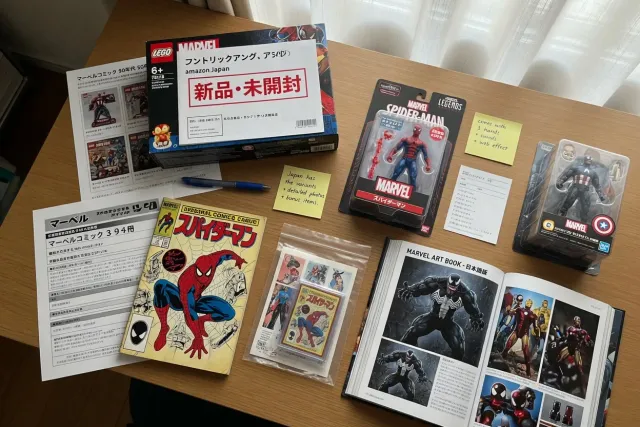
Japan has a long history of collecting Marvel characters in several forms: action figures, premium statues, LEGO Marvel sets, Japanese translations of American comics, art books, promotional items and character goods. This creates a broad second-hand market where a single search can surface everything from a modern Spider-Man figure to a 1990s Japanese comic collection.
For collectors outside Japan, the appeal is not simply that listings may be different. Japanese sellers often provide detailed photographs, identify included accessories and use recognizable condition language. The selection can also include products originally sold in Japan, such as Japanese publisher editions, retailer bonuses, lottery prizes and releases that entered the Japanese market through local distributors.
Start with the Marvel collection on JPFinds to browse live listings across supported Japanese stores and marketplaces. It is a useful starting point when you want to compare several categories rather than search only for one character or brand.
Know the main types of Marvel items available in Japan
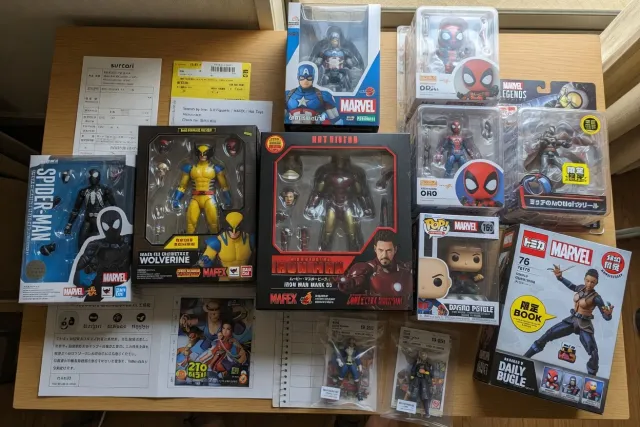
Searching becomes much easier when you know what kind of collectible you are trying to find. ·Marvel figure· is a broad phrase, and Japanese listings may categorize similar-looking items under entirely different product lines.
Figures, statues and articulated toys
Japan is a strong market for imported and domestic Marvel figures. Common categories include Hasbro Marvel Legends, Hot Toys Movie Masterpiece figures, S.H.Figuarts, Revoltech, MAFEX, Nendoroid, Kotobukiya ARTFX+, Funko Pop! figures and prize figures. Japanese listings may also include older Toy Biz items, Japanese magazine exclusives and figures sold with retailer-specific bonus parts.
Search by a product line whenever possible. A search for ·Spider-Man figure· may produce hundreds of unrelated items, while ·MAFEX スパイダーマン· or ·マーベルレジェンド スパイダーマン· is more likely to show the scale and style you expect.
LEGO Marvel sets and minifigures
Japanese sellers list complete boxed sets, opened sets, loose minifigures, instruction books, replacement parts and retired sets. A listing for a LEGO Marvel item may be organized under LEGO, the Japanese word for the character, a set number, or simply ·minifigure.· Set numbers are particularly valuable because they work across languages and reduce ambiguity.
For official information about current LEGO products and themes, consult the LEGO homepage. When comparing Japanese listings, use the set number and official item name as your reference point rather than relying only on a translated title.
Japanese Marvel comics, books and magazines
Marvel comics in Japan can mean several different things. You may find Japanese translations of US comic runs, manga-inspired Marvel stories, omnibus-style editions, art books, guidebooks, movie tie-in books and comic magazines that serialized translated material. Publishers and formats have changed over time, so the same storyline may exist in multiple Japanese editions.
Collectors should distinguish between a Japanese-language edition and an imported English-language comic sold in Japan. Both appear in Japanese listings, but they serve different collecting goals. A Japanese edition may have a unique cover design, localized title or different volume breakdown, while an imported American comic may be listed simply because it was previously owned in Japan.
Use Japanese search terms for better results
English searches can find many listings, but Japanese keywords reveal more inventory and make it easier to locate specific editions. Use a combination of character name, product line, brand and item type. Auto-translation helps you read results, but the original Japanese terms are still powerful search tools.
Useful general terms
- マーベル · Marvel
- フィギュア · figure
- アメコミ · American comics
- コミック · comic
- 単行本 · collected book volume
- レゴ · LEGO
- ミニフィグ · minifigure
- セット · set
- 限定 · limited or exclusive
- 廃盤 · discontinued or out of production
For character searches, try both the English name and Japanese rendering. For example, Spider-Man is commonly written as スパイダーマン, Iron Man as アイアンマン, Captain America as キャプテン・アメリカ, Wolverine as ウルヴァリン, and Avengers as アベンジャーズ.
Set numbers are the most dependable search tool for LEGO. Search the number alone first, then add ·レゴ,· ·未開封· or ·説明書· if you need a specific format. For figures, add a model number, release year, suit name or film title. For comics, search the Japanese title, creator name, publisher name or story arc name in addition to ·マーベル.·
Search by character, release line and edition — not just by franchise
Broad Marvel searches are useful for browsing, but collectors usually get better results by narrowing their request. Start with the exact item if you know it, then broaden only if needed. This reduces unrelated results such as apparel, keychains, trading cards and low-cost character goods.
- For figures: use character + line + costume or movie. Example: ·MAFEX アイアンマン Mark 85.·
- For LEGO: use the set number first, then add ·箱· for box or ·ミニフィグ· for minifigures.
- For comics: use title + ·邦訳· for a Japanese translation, or title + ·アメコミ· for American-comic-related listings.
- For rare accessories: search a figure name plus ·付属品,· meaning included accessories, or the specific accessory name.
It also helps to search for a character’s Japanese name without ·Marvel.· Some listings are filed under a film franchise, toy line or Japanese title rather than the Marvel brand. A Venom figure, for example, may be listed under ·ヴェノム,· while a Guardians of the Galaxy item may use the film’s Japanese release title.
When you are looking for a wider mix of characters and formats, revisit the Marvel listings hub and use it as a discovery tool. You may notice product lines or Japanese terminology that can become more precise follow-up searches.
Read condition terms and listing photos carefully
Condition matters differently depending on whether you collect sealed toys, display pieces, complete LEGO sets or readable comic volumes. Machine translation is helpful, but several standard Japanese terms are worth recognizing directly.
- 未開封 · unopened. Usually indicates that the package has not been opened, but still review photos for box wear, stickers or aging.
- 開封済み · opened.
- 美品 · beautiful item or very good condition. This is subjective, so photographs remain essential.
- 傷あり · has scratches or damage.
- 箱なし · no box.
- 欠品 · missing item, part or accessory.
- 現状品 · sold in current condition; check the description and images closely.
- 初版 · first edition, most relevant for books and comics.
For action figures, look for clear images of heads, hands, stands, effect parts, capes, joints and original packaging. For premium figures, make sure the listing establishes which base, plaque or alternate part is included. A low price can reflect a missing accessory rather than a bargain.
For LEGO, confirm whether the listing is a complete set, loose pieces, a partial build or a group lot. If completeness matters, check for minifigures, instruction manuals, sticker sheets and major unique elements. ·Box included· does not automatically mean the set is complete, and a pictured built model may not show every small part.
For comics, inspect photographs for cover wear, yellowing, water marks, writing, library stamps, detached pages or missing inserts. A comic described as 初版 may be desirable for edition-focused collectors, but first-print status alone does not guarantee better physical condition.
Verify Japanese editions, exclusives and authenticity signals
Japanese Marvel collecting often involves edition differences rather than simple counterfeits versus originals. A figure may be an official Japanese retail release, a Japanese distributor version, an imported international release, a convention item or a pre-owned display piece. Read the manufacturer, copyright marks, release line and product code where visible.
For comics, identify the publisher and publication date. Japanese translated editions can have different covers, trim sizes, paper stock and volume numbering from US originals. If you are trying to assemble a complete story, compare the table of contents or collected issue information whenever it is shown. A Japanese volume may contain a different number of original issues than an English trade paperback with a similar title.
For LEGO, set numbers, element markings and minifigure printing are useful reference points. Be cautious with listings that use vague wording such as ·compatible blocks,· ·style,· or ·type· rather than clearly naming LEGO. Official brand images and product references can help establish what should be included in a legitimate set.
For Marvel character information and official franchise references, the Marvel homepage is a reliable place to confirm character names, teams and media titles. It will not identify every collectible edition, but it can help you avoid searching for the wrong title or translation.
Build a repeatable search routine for Japanese listings
Popular Marvel products can appear and disappear quickly, so a repeatable process is more useful than a single broad search. Create a small list of searches for your priority items: exact model name, character plus product line, Japanese character name, set number, and a broader franchise search. Run these searches separately because each one catches different listing styles.
Keep a reference note for every target item with its official name, manufacturer, set or product number, original accessories, release year and any alternate Japanese names. This makes it faster to judge a listing when it appears. It is especially useful for collectible figures with several similar releases, such as multiple movie-suit versions of Iron Man or Spider-Man.
Before committing to an item, compare its photographs and description with your reference notes. Factor in the item price, domestic handling where applicable and the later international shipping payment when planning your budget. Combining several compatible collectibles into one shipment can also make sense for a collection, but avoid adding fragile boxed items merely to fill space.
Finally, be patient with unusual pieces. Older Japanese comic editions, retired LEGO sets and discontinued figure lines may surface under incomplete titles, mixed lots or category labels that are not obvious in English. Searching with Japanese terms, checking new listings regularly and staying flexible about packaging condition will give you the best chance of finding the Marvel items you actually want.
Related guides: explore the Marvel hub for more Japanese collectible listings and character-focused discoveries.