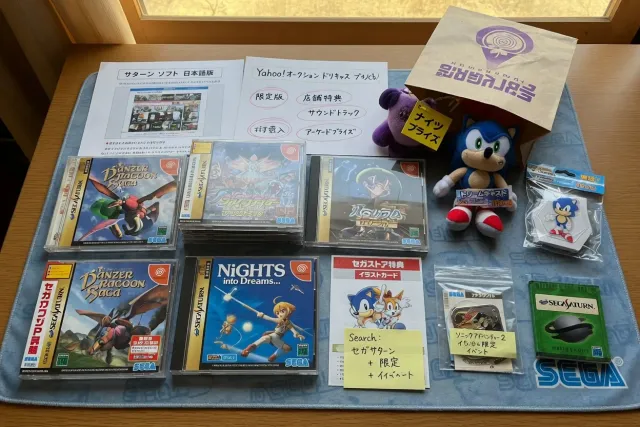
Japanese-exclusive SEGA games and collectibles are easiest to find by searching Japanese marketplace listings with the right platform names, character terms, and release-language keywords. Look beyond boxed games: Japan-only finds include Saturn and Dreamcast software, arcade prizes, store bonuses, plushes, soundtrack CDs, promotional goods, and limited event merchandise. Checking several Japanese marketplaces gives collectors the broadest view of what is currently available.
Understand what counts as a Japanese-exclusive SEGA collectible
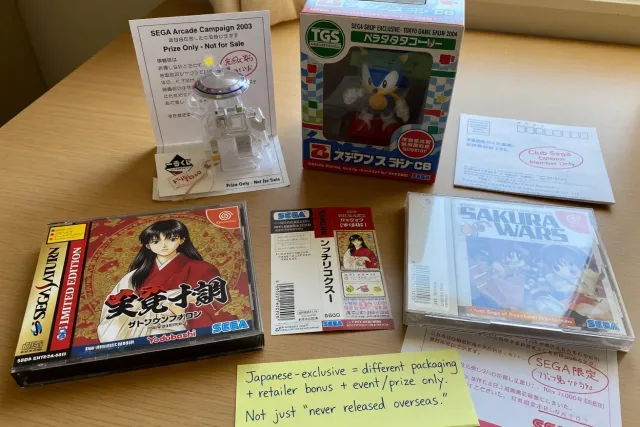
·Japanese-exclusive· does not always mean an item was never sold anywhere else. For collectors, it can describe a game or collectible that was released only in Japan, received different packaging in Japan, was distributed through a Japanese retail chain, or was available only through an event, arcade campaign, fan club, or prize machine.
This distinction matters because Japanese SEGA collecting covers far more than regional game discs. A title may have an overseas version while its Japanese release has exclusive cover art, a different spine card, bonus booklet, limited edition box, or retailer purchase benefit. Likewise, a character figure may have been sold internationally later, but its original Japanese arcade-prize release, first-run packaging, or campaign variant can still be the version collectors seek.
- Japan-only games: Releases for Sega Saturn, Dreamcast, Mega Drive, Game Gear, SG-1000, Mark III, and other systems that were not commercially issued outside Japan.
- Japanese editions: Domestic versions of multi-region titles, often identifiable through Japanese cover art, manuals, obi strips, spine cards, and catalog numbers.
- Arcade and prize goods: UFO catcher plushes, prize figures, acrylic stands, towels, badges, and seasonal campaign items.
- Retail and event bonuses: Purchase gifts, pre-order items, postcards, clear files, posters, display materials, and limited collaboration products.
- Music and print collectibles: Original soundtracks, drama CDs, guidebooks, art books, flyers, and Japanese gaming magazines with SEGA features.
A useful starting point is the SEGA collection hub, where live listings can help you spot the types of items appearing on Japanese marketplaces. Once you recognize a franchise’s typical Japanese packaging and terminology, it becomes much easier to separate ordinary merchandise from genuinely distinctive domestic releases.
Know the SEGA eras, platforms, and franchises worth searching
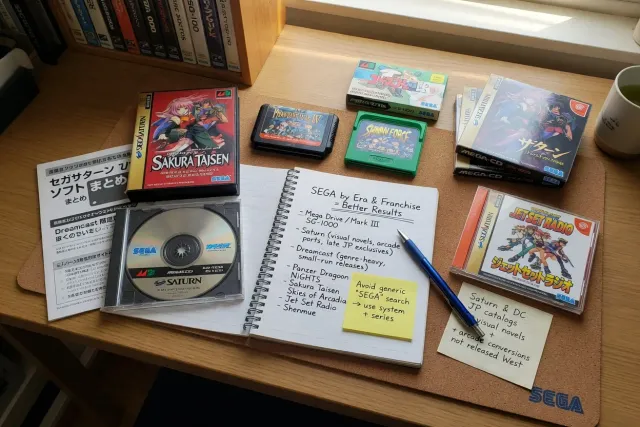
Japan’s SEGA history is broad, and search results improve when you approach it by hardware era and franchise rather than using only the word ·SEGA.· A general search can return everything from modern prize plushes to corporate memorabilia, while a system-specific or series-specific search is much more targeted.
Classic hardware releases
Japanese software libraries for the Mega Drive, Mega-CD, Saturn, Dreamcast, Game Gear, Mark III, and SG-1000 contain many releases with limited overseas exposure. Sega Saturn and Dreamcast are especially popular areas because their Japanese catalogs include genre-heavy titles, visual novels, arcade conversions, and late-era releases that may have had small production runs.
For physical software, collectors frequently search using Japanese hardware names: メガドライブ (Mega Drive), メガCD (Mega-CD), セガサターン (Sega Saturn), ドリームキャスト (Dreamcast), ゲームギア (Game Gear), and マークIII (Mark III). Add ソフト (software), ソフトウェア (software), or the title in Japanese to filter toward game listings.
Arcade heritage and character merchandise
SEGA’s arcade legacy creates a different category of collectible. Search for franchise names alongside アーケード (arcade), プライズ (prize), ゲームセンター (game center), or UFOキャッチャー (UFO catcher). These terms can surface promotional items and prize goods that were primarily distributed through Japanese amusement venues.
Popular searches may center on Sonic, Like a Dragon/Ryū ga Gotoku, Hatsune Miku: Project DIVA, Puyo Puyo, Sakura Wars, Phantasy Star, Shenmue, Virtua Fighter, Crazy Taxi, Jet Set Radio, and classic arcade properties. Use the Japanese series name as well as its English name. For example, Like a Dragon is often listed under 龍が如く, while Puyo Puyo is ぷよぷよ.
For background on SEGA’s current brands and official announcements, consult the official SEGA website. Official naming is useful when a long-running series has changed branding between Japanese and international markets.
Search Japanese keywords instead of relying on English titles
The biggest improvement a collector can make is using Japanese search terms. Auto-translation helps interpret listings, but sellers often list items under the wording printed on the box, prize tag, or original campaign material. Searching only an English title can miss a substantial portion of relevant inventory.
Start with the franchise or product name, then add one or two focused modifiers. Avoid entering too many words at once, because Japanese sellers may omit a term that seems essential to you.
- 限定 · limited edition or limited item
- 非売品 · not for sale; commonly used for promotional goods and prizes
- 特典 · bonus or purchase benefit
- 予約特典 · pre-order bonus
- 店舗特典 · store bonus
- 初回限定版 · first-run limited edition
- 初版 · first printing/first edition, particularly relevant for books and some print goods
- 販促品 · promotional item
- 当時物 · period/original-era item; useful but not a guarantee of authenticity
- セット or まとめ売り · set or bulk lot
Condition-related terms are also valuable when buying physical items. 未開封 means unopened, while 美品 generally means an item the seller considers to be in very good condition. Neither term replaces reviewing photos and the written description. For boxed games, search for 帯付き (with obi/spine strip), 説明書付き (with manual), or 箱説付き (with box and manual) if those components matter to your collection.
Try several query styles. A collector looking for a Japanese Sonic retail bonus might search ·ソニック 特典,· then ·ソニック 店舗特典,· and then add the relevant game title. Someone seeking Saturn software could search a title in Japanese plus ·セガサターン,· then repeat without the platform name to catch sellers who have categorized it loosely.
Use the right Japanese marketplace for each type of SEGA item
Different Japanese shopping sources tend to produce different kinds of SEGA finds. Searching across multiple sources is important because a rare item may appear as a single fixed-price listing, an auction lot, a specialist retro-game listing, or a handmade display accessory.
Mercari for everyday discoveries and character goods
Mercari often has individual seller listings for prize plushes, keychains, acrylic goods, soundtrack CDs, older games, and mixed lots. It can be especially useful for finding items that are being cleared from personal collections. Search often, because desirable listings may be purchased quickly and sellers do not always use consistent category labels.
JDirectItems Auction for competitive and unusual lots
JDirectItems Auction can be productive for older hardware-era games, flyers, store displays, arcade-related material, and multi-item lots. Auction listings reward careful reading: confirm exactly which items are included, whether photos show the actual item, and whether a box, manual, spine card, or bonus is present. A low opening price may reflect an incomplete item, visible wear, or a bundle where the most interesting item is only one component.
Surugaya for cataloged retro goods
Surugaya is a useful source for retro games, character merchandise, books, CDs, and hobby collectibles. Its inventory can be particularly helpful when you know a title, catalog number, or exact product line. Specialist retailers may describe contents more systematically than individual sellers, but collectors should still review stated condition and included accessories.
Amazon Japan and Minne for modern and adjacent finds
Amazon Japan can be useful for current official books, newly released merchandise, soundtrack reissues, and readily available Japanese editions. Minne is more relevant for fan-made storage, display, and organizing accessories than official SEGA collectibles; use it when you want an original way to protect or present an existing collection, not when searching for official game merchandise.
JPFinds brings live listings from these sources into one searchable experience, with automatic translation to make Japanese descriptions easier to evaluate. Browse current SEGA listings from Japan while also running your own Japanese keyword combinations for narrower targets.
Read listings like a collector, not just a shopper
Finding a promising search result is only the first step. Japanese listing titles can be short, and photos often contain details that do not appear in translated text. Before committing to an item, compare the listing against the version you actually want.
- Check the exact edition. Limited boxes, standard editions, reprints, budget versions, and retailer variants can have similar titles but different contents.
- Confirm included components. For games, look for case, disc or cartridge, manual, spine card, registration card, inserts, and any advertised bonus. For figures and plushes, verify tags, stands, base parts, and original packaging where relevant.
- Review every photo. Look for sun fading, sticker residue, tears, cracked cases, scratches, moisture damage, writing, and missing parts. Older cardboard packaging and paper goods are particularly susceptible to edge wear.
- Read condition disclaimers. Terms such as ジャンク (junk/as-is), 動作未確認 (operation not checked), and 現状品 (sold in current condition) deserve extra caution.
- Watch for ·only· wording. 箱のみ means box only; 説明書のみ means manual only; 本体のみ means main item only. These phrases can be easy to miss in a longer title.
For promotional and arcade goods, provenance can be less obvious than it is for mass-produced retail games. Compare logos, copyright lines, tags, package printing, release-era design, and known product photos. A vague title such as ·SEGA character goods· may hide a valuable campaign item, but it can also describe an unbranded assortment. Treat seller descriptions as useful evidence, not final proof.
Build a repeatable search routine for rare Japanese finds
Rare SEGA collectibles are usually found through consistency rather than one perfect search. Make a small watch list for each target: the English title, Japanese title, common abbreviations, character names, platform name, and words such as 特典 or 非売品. Rotate through broad and narrow searches so you can catch both accurately listed items and poorly categorized discoveries.
It also helps to set a clear collecting boundary. Decide whether you are pursuing complete Japanese game releases, a single franchise’s prize merchandise, arcade flyers, first-run editions, or a particular console era. A focused list prevents duplicate purchases and makes it easier to recognize a genuinely uncommon item when it appears.
When several items are available, prioritize the version that best fits your goal rather than automatically choosing the lowest price. A complete Japanese Saturn game with its manual and spine card may be more suitable for a display collection than a cheaper disc-only copy. Conversely, a loose cartridge can be the sensible choice if your main interest is assembling a representative library.
For international collectors, a shopping proxy also makes it practical to combine purchases from different Japanese sources. With JPFinds, purchases use a two-payment structure: the item-side charges are handled first, and international shipping is paid after items are consolidated and shipping options are selected. That approach can be useful when you are gathering several smaller SEGA goods, such as game software, prize items, and paper collectibles, from separate sellers.
Find overlooked categories beyond boxed games
Some of the most interesting Japanese-exclusive SEGA items are not software. Looking beyond standard game listings gives you access to the culture around SEGA’s consoles, arcades, and characters.
- Arcade flyers and operator materials: Promotional sheets, cabinet brochures, instruction cards, and event handouts tied to arcade releases.
- Retail display items: Counter cards, posters, shelf talkers, hanging banners, and standees. Check dimensions before buying, as Japanese shop displays can be larger than expected.
- Magazine inserts and strategy books: Japanese magazines often carried posters, supplements, and detailed coverage unavailable in overseas publications.
- Prize-series merchandise: Plushes and figures from arcade campaigns may have character poses, colorways, or tags unique to a particular Japanese release wave.
- Soundtracks and drama CDs: Japanese releases can include original cover art, booklets, and catalog-specific editions that appeal to franchise collectors.
- Collaboration goods: Cafés, department stores, pop-up events, and anniversary campaigns can produce short-run items that are difficult to locate after the event ends.
These categories benefit from broader searches. Pair the franchise name with ポスター (poster), チラシ (flyer), サウンドトラック (soundtrack), ぬいぐるみ (plush), アクリルスタンド (acrylic stand), or コラボ (collaboration). The result is a more complete picture of Japanese SEGA collecting — one that includes the objects surrounding the games as well as the games themselves.