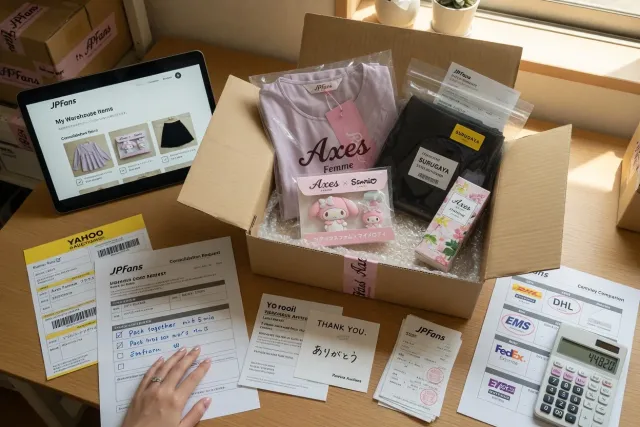
To consolidate and ship your purchases with JPFinds, first complete payment for the items you have bought, wait for them to arrive at the JPFinds warehouse, then select the items you want packed together. After the parcel is prepared, choose an available international carrier, pay the shipping charge, and the package will be dispatched to your address.
What consolidation means when shopping from Japan
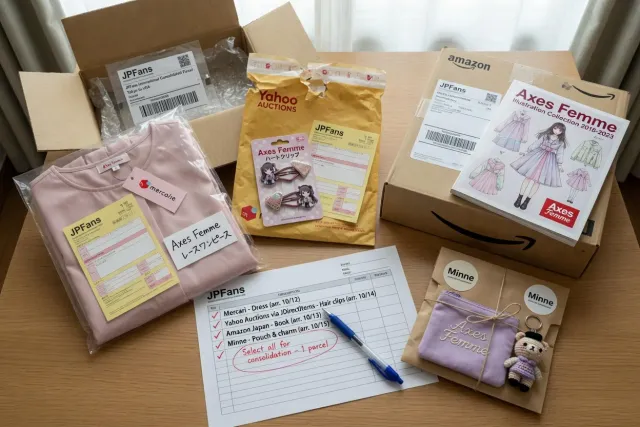
Consolidation means combining multiple purchases into a single international shipment. Instead of paying separate international shipping charges for each item, you can wait until several orders have reached the JPFinds warehouse and send them together.
This is especially useful when you buy from more than one Japanese marketplace or store. You might purchase a dress from Mercari, accessories from Yahoo Auctions through JDirectItems, a book from Amazon Japan, and handmade items from Minne. Although these purchases come from different sellers and may arrive at different times, they can be selected for the same outgoing parcel once they are available in your warehouse inventory.
Consolidation does not always mean putting every item you own into the largest possible box. The best shipment is usually the one that balances total weight, parcel dimensions, the carrier options available for your destination, and the value of the items inside. A single heavy parcel may be convenient, while two smaller parcels can sometimes be a more practical choice depending on the items and shipping method.
For example, a shopper building an axes femme collection from Japan may decide to combine several lightweight blouses, skirts, and accessories in one shipment. If a bulky coat or a rigid item would substantially increase the parcel size, it may make more sense to send that purchase separately.
Understand the two payments before you request shipping
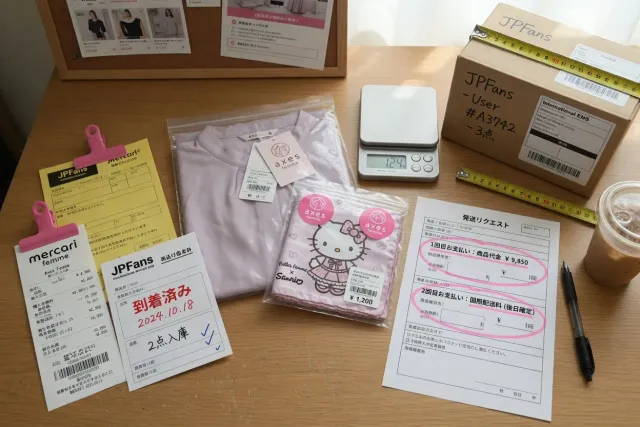
JPFinds uses a two-payment process because the cost of purchasing items and the cost of sending them internationally are determined at different stages.
First payment: the purchase stage
The first payment covers the cost required to buy the item from the seller or store. Depending on the source, this can include the item price and relevant purchase-related charges shown during checkout. Once your order is completed, the seller sends it to the JPFinds warehouse.
At this stage, international shipping cannot be calculated precisely because the final shipment may include additional purchases that have not arrived yet. The final parcel weight and dimensions are also not known until you decide what to consolidate.
Second payment: the shipping stage
The second payment is requested after you have chosen the warehouse items for shipment and a parcel has been prepared. It covers international shipping and any applicable shipment-related charges. Carrier availability, parcel size, weight, destination, and shipping method all affect this total.
Keeping these payments separate gives you flexibility. You can buy an item when you find it, then decide later whether to send it alone, combine it with other purchases, or wait until more orders reach the warehouse.
- Payment one: purchase your selected Japanese items.
- Warehouse stage: wait until eligible purchases are listed as available.
- Consolidation request: select the items that should share a parcel.
- Payment two: choose an available shipping method and pay for dispatch.
When to consolidate and when to ship separately
Consolidation is often an efficient choice, but it should be planned around the physical characteristics of your purchases rather than used automatically for every order.
Good candidates for one combined parcel
Items that are compact, light, and not easily damaged are commonly suitable for consolidation. Clothing, fabric accessories, stationery, books, small character goods, and many fashion items can often travel well together when packed appropriately. Combining several purchases can reduce repeated international shipping charges and makes tracking multiple small parcels easier.
Fashion shoppers may find this particularly helpful when ordering several pieces over time. A cardigan, skirt, blouse, hair accessory, and bag from axes femme listings may be more economical and convenient to send together than as separate shipments, provided the combined parcel remains within the limits for the selected carrier.
Items that may be better in separate shipments
Consider separating items when one purchase is unusually large, heavy, fragile, or awkwardly shaped. A single oversized item can force a larger carton and affect shipping charges for everything packed with it. Likewise, mixing a delicate collectible with dense, heavy goods can create packing challenges.
It can also be sensible to create separate shipments when you want different delivery addresses, need one group of items sooner than another, or wish to use different shipping methods for different categories of goods. Before submitting a consolidation request, think about how the parcel will be handled from packing through final delivery.
Remember that international carriers may apply both weight and dimensional rules. A box filled with lightweight but bulky items can be charged differently from a smaller carton containing heavier purchases. Removing unnecessary product packaging is not always appropriate, particularly when original boxes are important to you, so factor packaging preferences into your decision.
How to request consolidation in your JPFinds account
Once your purchases have arrived and appear as available in your account, you can start the shipment process. The exact labels in the interface may vary, but the overall workflow is straightforward.
- Review your warehouse inventory. Check that each item you want to send is listed and available for shipment.
- Select the purchases for the parcel. Choose only the items you want packed together. Leave any items you want to keep for a future shipment unselected.
- Confirm the destination. Make sure the recipient name, address, postal code, and contact details are accurate and formatted appropriately for the destination country.
- Submit the consolidation or shipping request. This tells the warehouse which purchases should be prepared as one shipment.
- Review the shipping options when available. After parcel preparation, select from the available carrier services and complete the second payment.
Before confirming, review your selections carefully. Accidentally including an item intended for a later order can change the parcel size, shipping options, and total cost. Conversely, leaving out a small item may result in another separate shipment later.
If you are buying seasonal fashion, it can help to group purchases by practical use. For instance, sending a coordinated outfit together means you receive the pieces in one parcel, while keeping a future-season purchase in storage can prevent it from delaying items you are ready to ship now.
Choose an international shipping method carefully
After your parcel is prepared, JPFinds will show shipping methods available for your destination and shipment. Availability can vary according to the country, parcel measurements, contents, and carrier rules. Do not assume that a method available for one order will necessarily be available for every future parcel.
When comparing options, look beyond the headline price. Consider tracking availability, compensation terms offered by the carrier, handling requirements, size limits, and whether the service accepts the contents of your package. For official postal information and country-specific restrictions, consult the Japan Post homepage.
Weight and dimensional weight
Shipping cost may be affected by actual weight, parcel dimensions, or both. Dimensional weight is a carrier calculation that reflects how much space a parcel takes up during transport. This matters for bulky apparel, hats, plush goods, footwear boxes, and other items that may be light but require a large carton.
To make better decisions, group compact items together where possible and avoid combining a few small purchases with one object that requires an oversized box unless the overall convenience is worth it. Keep in mind that preserving original retail boxes may increase volume, even if the item itself is small.
Contents and shipping restrictions
Every carrier and destination has rules about what may be shipped internationally. Restrictions can apply to items containing batteries, aerosols, liquids, fragrances, pressurized products, and certain materials. Rules also change, so review the current carrier guidance before choosing a method.
Be accurate when providing shipment information. A clear description such as ·cotton blouse,· ·paperback books,· or ·fashion accessories· is more useful than a vague label such as ·gift· or ·goods.· Accurate declarations support smoother customs processing and help ensure that the shipment details match the parcel contents.
Prepare for customs, duties, and recipient responsibilities
International shipping does not end when a parcel leaves Japan. The destination country may assess import taxes, duties, brokerage charges, or other fees. These charges are set by the authorities or carrier procedures in the destination country, not by the Japanese seller.
The recipient is generally responsible for complying with local import rules and paying applicable charges. Thresholds, tax rates, prohibited goods, and documentation requirements differ widely by country and can change over time. Check your local customs authority before shipping high-value purchases or regulated categories.
Use truthful values and item descriptions. Understating a value or mislabeling contents can create customs problems, delays, penalties, or loss of carrier coverage. If you have several purchases in one parcel, remember that customs authorities may consider the shipment as a whole when assessing its declared value and contents.
- Use the recipient’s full legal name where required.
- Enter a complete address, including unit or apartment details.
- Provide a reachable phone number if requested by the carrier.
- Check whether your destination requires a tax identification number or other import information.
- Keep purchase records for your own reference.
Ways to make consolidation more efficient
A little planning can make your JPFinds shipments easier to manage and may prevent unnecessary extra parcels.
Build a purchase list before you buy
Make a short list of the items you hope to consolidate: for example, two dresses, a blouse, shoes, a bag, and accessories. This helps you estimate whether the order will remain compact or whether a large item should be treated as its own shipment. It also reduces impulse shipping after every individual purchase arrives.
Track arrival status instead of seller dispatch dates
Different sellers dispatch at different speeds, and domestic transit within Japan also varies. The important point for consolidation is when each item becomes available in your warehouse inventory. If one order has not arrived yet, you can decide whether waiting for it is worthwhile or whether to ship the available items first.
Group items with compatible packing needs
Soft clothing is usually easy to combine with other soft goods, while rigid, delicate, or unusually shaped items may need their own space. Grouping compatible items can help create a more sensible parcel. Consider the practical result: a coordinated fashion order may pack efficiently, whereas shoes with retained boxes, a large bag, and several fragile items may require more volume.
Keep your address current
Confirm your delivery address before paying for international shipping, especially if you have moved or are sending a parcel to another person. Address corrections after dispatch may be limited or may involve carrier procedures outside JPFinds· control.
Final checklist before paying for international shipping
Before completing the second payment, take a moment to confirm the essentials. This final review is the simplest way to avoid an unwanted split shipment, an incorrect destination, or a carrier choice that does not fit your parcel.
- All intended warehouse items are selected.
- Items you want to save for later are not selected.
- The recipient name, address, postal code, and phone number are correct.
- The available shipping method accepts your parcel contents.
- Your customs information and item descriptions are accurate.
- You understand that destination-country duties or taxes may apply.
- You have reviewed the shipping charge before completing payment.
Once payment is completed and the shipment is dispatched, keep the tracking information available and follow carrier updates directly. Consolidation gives you control over how your Japan purchases are grouped; careful selection and accurate shipping details help you use that flexibility effectively.