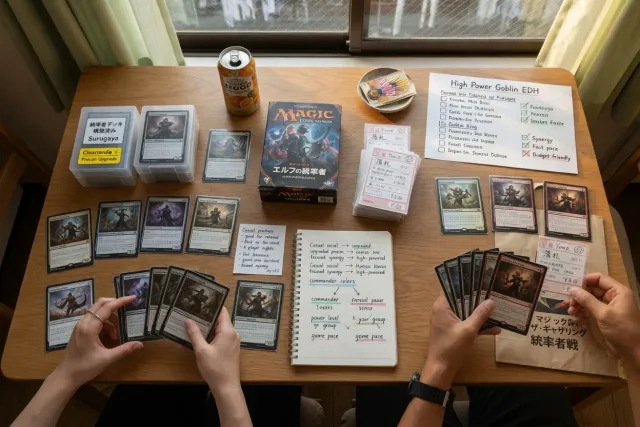
Choose an EDH or Commander deck by starting with the experience you want at the table: casual social games, upgraded preconstructed play, focused synergy, or high-powered competition. Then select a commander whose colors and abilities support a strategy you enjoy, build at an appropriate power level for your group, and make sure the deck’s complexity, budget, and game pace suit you.
Understand What EDH and Commander Mean
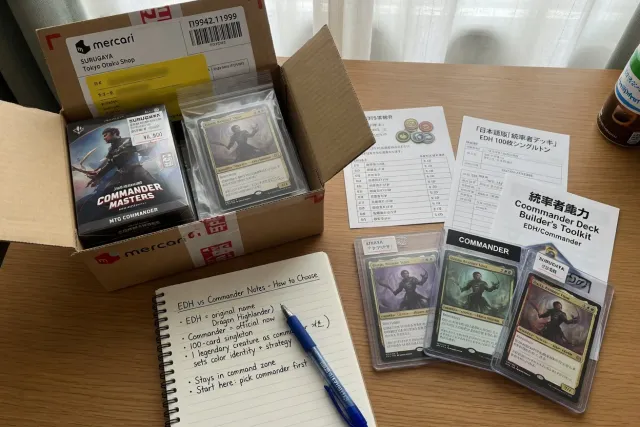
EDH, short for Elder Dragon Highlander, is the original name commonly used for what is now officially called Commander. In most conversations, EDH and Commander refer to the same Magic: The Gathering format: a 100-card singleton deck led by a legendary creature or another card specifically allowed to be your commander.
Commander differs from many other Magic formats because deck choice is about more than identifying the strongest individual cards. Your commander establishes your deck’s color identity, often signals its main strategy, and remains available in the command zone throughout the game. That consistency makes the commander the best place to begin.
A typical Commander deck includes:
- One commander, usually a legendary creature.
- 99 additional cards, with no duplicate non-basic cards.
- A color identity determined by mana symbols on the commander, including symbols in its rules text.
- A multiplayer focus, generally with four players and 40 starting life each.
The official Magic: The Gathering website is a useful reference for current product information, rules announcements, and format-related updates. For deck selection, however, the most important question is simpler: what type of games do you personally want to play?
Start With Your Preferred Play Experience
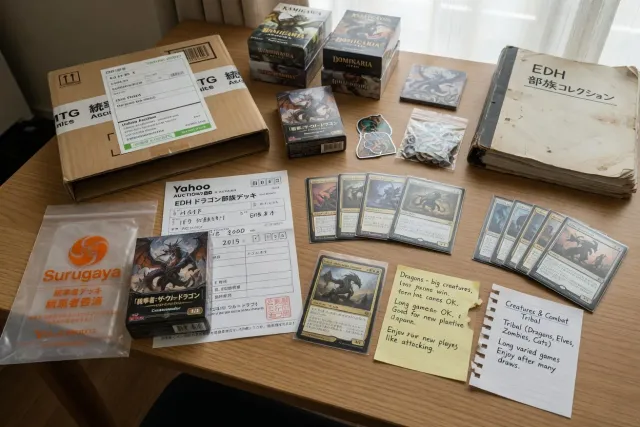
Before comparing commanders, decide what makes a game enjoyable for you. A deck can be well built and still be the wrong choice if its decisions, pace, or win condition do not match your preferences.
Choose a broad strategy you will enjoy repeatedly
Commander games are often longer and more varied than one-on-one games. Pick a strategy that you will still enjoy after drawing different combinations of cards across many sessions.
- Creatures and combat: Play large creatures, build a board, and win through attacks. This is often intuitive for new players.
- Tribal or typal themes: Build around a creature type such as Dragons, Elves, Zombies, Cats, or Goblins. These decks offer clear flavor and natural card synergy.
- Tokens: Create many creature tokens, then strengthen them with anthem effects or use them as resources.
- Artifacts or enchantments: Build around permanent types that create engines, value, or unusual interactions.
- Spellslinger: Cast instants and sorceries, often gaining benefits from casting spells or copying them.
- Graveyard strategies: Fill the graveyard and reuse cards, recur creatures, or benefit from cards leaving the graveyard.
- Control: Slow opponents down with removal, counterspells, and board wipes before winning through a durable threat or combination.
- Combo: Assemble cards that create a decisive interaction, potentially ending the game without conventional combat.
There is no universal ·best· archetype. A player who enjoys carefully sequencing spells may find a creature-heavy deck repetitive, while a player who likes combat may dislike holding up mana for reactive answers. Be honest about what you find satisfying rather than choosing solely because a commander is popular.
Consider how much table interaction you want
Commander is social and interactive. Some decks mainly pursue their own plan, while others actively influence every player’s board. Aggressive creature decks may pressure life totals directly. Control decks answer threats frequently. Political decks create incentives, distribute benefits, or negotiate temporary alliances.
If you are newer to multiplayer Magic, a proactive deck with creatures, ramp, and straightforward removal is often easier to pilot than a heavily reactive deck. You will spend less time trying to predict three opponents· possible plays and more time learning common Commander patterns.
Pick a Commander That Clearly Supports the Deck
Your commander should do more than look powerful. It should give the deck direction, reward the cards you want to include, or provide a reliable backup plan when your hand is weak.
Use the commander as a strategy statement
A good commander usually answers at least one of these questions:
- What cards does this deck want to play?
- What resource does this deck generate: cards, mana, tokens, counters, sacrifice fodder, or damage?
- How does this deck move toward winning?
- What happens if the commander is removed several times?
For example, a commander that creates a token whenever you cast an artifact suggests an artifact-token deck. A commander that returns a creature from the graveyard suggests sacrifice, self-mill, or reanimation themes. A commander that grants a combat bonus points toward attacking, but you still need a plan for rebuilding after a board wipe.
Avoid choosing a commander only because it has impressive text. Some commanders attract immediate attention from the table and are removed often. Others require several pieces in play before they do anything. These can be excellent choices, but they demand more deckbuilding support and more patience during games.
Decide whether you want a commander that is essential or supportive
An essential commander is central to the deck’s engine. Without it, the deck may function poorly. This can be exciting because you have consistent access to your key card, but commander tax makes repeated recasting increasingly expensive.
A supportive commander improves the deck without being required for it to function. A creature-focused deck, for instance, can still attack and develop its board even if its commander is unavailable. This style is often more resilient and forgiving for newer players.
For a first deck, supportive commanders are frequently the safer choice. They allow you to learn fundamental skills — mana development, threat assessment, combat, and removal timing — without feeling that every game depends on protecting one card.
Choose Colors Based on Play Style and Mana Comfort
Color identity affects far more than a deck’s visual theme. It determines which kinds of answers, threats, card advantage, and mana acceleration are available to you. More colors create more options, but they also make the mana base more complicated.
- White: Efficient removal, board wipes, protection, tokens, and rules-setting effects.
- Blue: Card selection, counterspells, artifacts, copying, and tempo-oriented interaction.
- Black: Removal, sacrifice, graveyard recursion, life-for-resources effects, and tutoring.
- Red: Damage, impulsive card advantage, Treasures, artifacts, combat, and chaotic play patterns.
- Green: Land-based mana acceleration, large creatures, enchantments, and creature-focused card draw.
A one- or two-color deck is often easier to build and play consistently. You will have fewer mana problems, clearer card choices, and a more accessible land base. Three-color decks offer greater flexibility and can cover more weaknesses, but require more attention to colored mana sources. Four- and five-color decks provide broad access to cards, yet can become expensive or inconsistent if the mana base is not carefully planned.
Do not assume that more colors automatically mean a stronger deck. A focused two-color deck with reliable mana can perform better than a five-color pile that cannot cast its key spells on time. Choose the fewest colors that let you play the strategy you actually want.
Match the Deck’s Power Level to Your Playgroup
Power level is one of the most important parts of choosing a Commander deck. It is not a perfect numerical scale; it is a conversation about speed, consistency, interaction, and expectations. A deck can feel unpleasantly strong in one group and completely normal in another.
Before choosing a deck, ask the people you play with what their games are like. Useful questions include:
- How early do games usually end?
- Do players use fast mana, tutors, or infinite combos?
- Are mass land destruction, repeated extra turns, or heavy resource denial welcome?
- Do players prefer preconstructed decks, upgraded casual decks, or highly tuned lists?
- How much removal and board wiping is typical?
Preconstructed Commander decks are a sensible baseline for many groups. They typically contain a cohesive theme, enough lands to function, and a mix of threats and answers. They may not be perfectly optimized, but they give you a playable starting point and make it easier to identify which parts of a strategy you enjoy.
At the other end, highly tuned decks use efficient mana, dense interaction, consistent card selection, and compact win conditions. These are appropriate when everyone at the table wants fast, technical games. Bringing such a deck to a relaxed creature-combat table can lead to mismatched expectations even if every card is legal.
When uncertain, choose a deck with a clear theme, moderate interaction, and multiple fair ways to win. You can always improve it over time after seeing how it performs in your regular group.
Evaluate Complexity, Consistency, and Game Pace
Two decks with similar power can feel completely different to play. Consider not just what the deck does when it works, but how many decisions it asks you to make each turn.
Complexity: how much tracking and sequencing is involved
Some strategies are naturally demanding. Token decks may create large boards with many triggers. Artifact decks can involve numerous activated abilities and resource loops. Graveyard decks require careful knowledge of zones and timing. Spellslinger decks may ask you to hold mana, assess threats, and sequence multiple spells precisely.
For a newer player, complexity is not bad — it can be rewarding — but it should be intentional. If you want to learn the format comfortably, choose a deck whose main turn is easy to explain in one sentence. ·I ramp into big creatures and attack· is easier to manage than ·I create artifacts, sacrifice them for mana, recur them, and copy triggered abilities.·
Consistency: can the deck execute its plan often?
Commander is singleton, so no deck draws the same way every game. Consistency comes from including enough cards that serve similar roles. A creature deck needs multiple ramp spells, card-draw sources, threats, and removal options — not one of each.
When looking at a deck concept, check whether it has:
- Reliable mana production and enough lands.
- Several ways to draw cards or generate card advantage.
- Enough interaction to answer dangerous permanents or spells.
- More than one payoff for its primary theme.
- A recovery plan after a board wipe or commander removal.
A deck that depends on drawing a single specific card can create memorable highlights but may produce many games where it does very little. For most players, a slightly less explosive deck that functions every game is more enjoyable.
Game pace: proactive, reactive, or engine-based
Think about whether you like moving the game forward or responding to it. Proactive decks develop creatures, tokens, or permanents and ask opponents to react. Reactive decks hold resources and answer key threats. Engine decks spend early turns building value, then generate an overwhelming advantage later.
None is inherently better. The right pace is the one that keeps you engaged during a full multiplayer game. If you dislike waiting with mana open, avoid a deck that relies on frequent counterspells. If you enjoy long-term planning, an engine deck may be more satisfying than an all-in combat strategy.
Use a Practical Checklist Before Committing to a Deck
Once you have a commander or deck concept in mind, run through a final checklist. This prevents the common mistake of selecting a deck based entirely on one flashy interaction or favorite card.
- Theme: Can you describe the deck’s plan clearly?
- Commander fit: Does the commander actively support that plan?
- Colors: Are you comfortable managing this many colors?
- Win conditions: Does the deck have realistic ways to close games?
- Interaction: Can it respond to artifacts, enchantments, creatures, and problematic spells when needed?
- Resilience: Can it recover if the commander is removed or the board is cleared?
- Complexity: Can you track the triggers, resources, and decisions without frustration?
- Playgroup fit: Will its speed and style create enjoyable games for the people you play with?
It is also helpful to test a deck idea through sample hands. Draw several opening hands and ask whether you can make early land drops, cast relevant spells, and understand your likely first few turns. A deck does not need a perfect opening every time, but repeated unplayable hands are a warning that its mana or card balance needs work.
As you explore different commanders, browse the Magic The Gathering collection for inspiration across themes, colors, and legendary characters. The best Commander deck is rarely the one with the most complicated text or the largest collection of powerful cards. It is the deck whose choices, pacing, and personality make you want to shuffle up again.
Related guides: explore more Magic The Gathering favorites for cards and products connected to your preferred Commander theme.