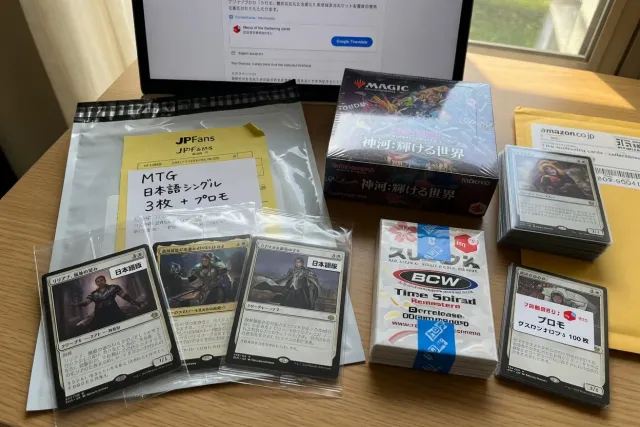
Buying Magic: The Gathering cards from Japan is a practical way to find Japanese-language printings, older singles, sealed products, promotional cards, and collector-focused listings. With JPFinds, you can shop live Japanese marketplace listings, review translated descriptions, pay for selected items, consolidate purchases, and choose from available international shipping options when your package is ready.
Why Buy Magic: The Gathering Cards From Japan?
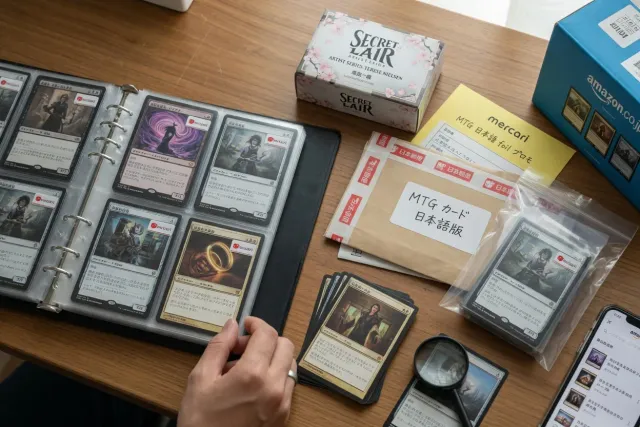
Japan has been an important Magic: The Gathering market for decades. Japanese stores and individual sellers list everything from current Standard releases to early-era cards, Commander staples, foils, Secret Lair products, event promos, and Japanese-language versions of international sets. For collectors, Japanese cards can offer a distinctive combination of localized art presentation, print history, and availability.
Japanese-language cards are particularly popular for cards with memorable artwork, older black-border printings, and foil versions. Some players also seek Japanese cards simply because they enjoy the visual appeal of the card frame and language. If you are building a binder, completing a set, or searching for a particular printing, shopping in Japan expands the range of listings beyond your local market.
Japan is also useful for buyers looking for carefully categorized trading-card inventory. Specialist card shops commonly separate listings by rarity, set, language, condition, and whether an item is sealed. Individual sellers on large marketplaces may list lower-priced singles, older bulk lots, and collection clear-outs that are difficult to find through conventional international card retailers.
For a broad starting point, browse the Magic The Gathering collection on JPFinds. It brings together relevant Japanese listings so you can search for individual cards, booster boxes, decks, accessories, and collectible releases.
What Magic: The Gathering Products Can You Find in Japan?
The Japanese market includes far more than modern booster packs. Your search can be as focused or as broad as your collecting goal requires. Before shopping, decide whether you are looking for a specific card, a particular set, sealed product, or a mixed lot.
Singles and specific printings
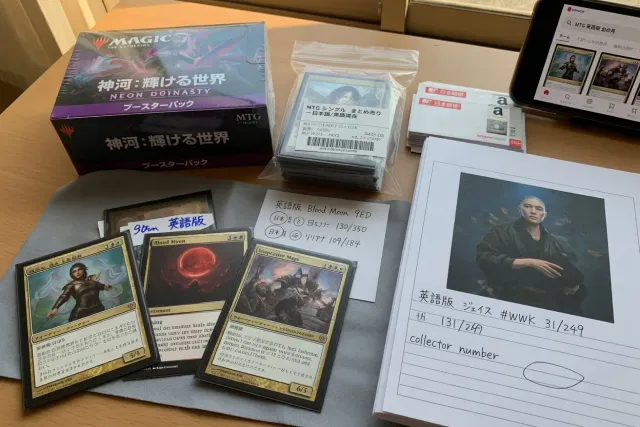
Singles are the best choice when you know the exact card you want. Search using the English card name, the Japanese card name, set name, collector number, or a combination of these. Collector numbers are especially useful because translated names and printings can vary while the card number identifies the version more precisely.
Japanese sellers may use terms such as 英語版 (English edition), 日本語版 (Japanese edition), Foil, 拡張アート (extended art), or ショーケース (showcase). Do not assume every listing found in Japan is Japanese-language; many Japanese stores also sell English cards and other language editions.
Sealed boosters, boxes, and decks
Japanese listings can include draft boosters, set boosters, collector boosters, booster boxes, bundles, preconstructed decks, Commander decks, and special releases. Sealed collectors should look closely at the listing title and photos to distinguish loose packs from a full box or a factory-sealed product.
Useful condition terms include 未開封, meaning unopened, and 新品, meaning new. These describe the seller's listing condition, not a guarantee of contents or future value. Read the full description and review every available image for wrap condition, dents, tears, store stickers, or signs that a product has been opened.
Promos, older cards, and mixed lots
Japan is a strong source for tournament promos, Japanese magazine inserts, store promotions, older starter products, and cards from retired formats. Mixed lots can be worthwhile for casual collecting, but they require extra care. A lot may contain duplicates, cards in mixed condition, multiple languages, or cards that are not from the set pictured in the headline.
When buying a lot, confirm the approximate card count, language, condition range, and whether the seller has shown representative photos of the actual cards. If a listing says まとめ売り, it generally means a bundle or lot sale.
Where to Search for Japanese MTG Listings
JPFinds gives international buyers access to live listings from Japanese shopping channels, including Mercari, JDirectItems/Yahoo Auctions, Amazon Japan, Surugaya, and Minne. For Magic cards, the most useful source depends on the type of item you want and how much listing detail you need.
- Mercari: Often useful for single cards, personal collection sales, binder lots, and recently released products. Prices can vary widely, so compare several listings.
- JDirectItems/Yahoo Auctions: Helpful for auctions, older cards, unusual bundles, and collectible items. Check whether the listing is an auction or fixed-price format before deciding how much you are prepared to spend.
- Amazon Japan: Can be convenient for current sealed products and officially distributed accessories, although third-party listing details should still be read carefully.
- Surugaya: A Japanese retailer known for used media and hobby goods. Its inventory can be useful for older singles, card supplies, and pre-owned collectible products.
Search results are auto-translated, but card names, abbreviations, and condition language can lose nuance. Use the original Japanese title alongside the translation whenever possible. A card's English name may not always return the best Japanese results, particularly for older cards whose Japanese titles differ significantly from a direct translation.
Try multiple search approaches: the card name, set abbreviation, collector number, artist name, and Japanese set title. For example, an exact collector number plus ·Foil· can be more reliable than a broad search for an English card name.
How to Read Japanese Card Conditions and Listing Details
Condition is one of the most important parts of buying collectible cards online. Japanese sellers and stores often use condition labels, but standards are not universal. Treat labels as a starting point, then use photos and description notes to decide whether the item suits your expectations.
- 美品: Literally ·beautiful item·; often indicates a clean-looking card, but it does not necessarily mean flawless or professionally assessed.
- 傷あり: Has damage, wear, scratches, or other flaws.
- 白欠け: Whitening, usually around edges or corners.
- 反り: Warping or curling.
- プレイ用: Intended for play; typically signals visible wear and should not be treated as a near-mint collectible copy.
- 初版: First edition or first printing, where applicable. Verify the actual printing identifiers rather than relying on the term alone.
For a single high-value card, inspect front and back photos for edge whitening, corner wear, surface scratches, clouding, dents, bends, and centering. Photos taken in sleeves or top loaders can hide surface issues, so check whether there are images outside the sleeve. If the listing offers only a stock image, do not assume it represents the exact card you will receive.
Also verify the language, set symbol, card number, finish, and edition. Magic has many reprints, promotional variants, and visually similar versions. A listing title may highlight a famous card name while the photo reveals a different printing. Matching the collector number and set information is the safest approach.
How to Check Authenticity Before You Buy
Counterfeit risk exists in every international collectibles market, especially for expensive singles, older cards, and premium foils. Buying from established Japanese hobby retailers can reduce uncertainty, but it is still wise to evaluate each listing carefully.
Start with the basics: compare the card's artwork, mana symbols, set icon, collector number, copyright line, frame treatment, and foil pattern against reliable reference images. Examine whether fonts look unusually thick, blurry, or misaligned. Be cautious of listings with unusually low prices, generic images, limited description, or photographs that do not clearly show the actual card.
For sealed products, compare the box design, wrapping, labels, and product name with official release information. Wizards of the Coast is the official publisher of Magic: The Gathering; its homepage is a useful reference point for current product announcements and game information: Magic: The Gathering official website.
If authenticity is a major concern, prioritize listings with clear, high-resolution photos and a precise description. Avoid making assumptions based solely on a seller's use of words such as ·rare,· ·vintage,· or ·authentic.· Those terms are descriptive claims, not proof of a card's identity or condition.
Using JPFinds to Buy and Consolidate Your Cards
JPFinds is designed to help overseas shoppers buy from Japanese stores and marketplaces that may not ship internationally. Once you find a listing, review the item price, seller details, listing condition, and any applicable domestic shipping charge within Japan. Make sure you understand exactly what is included before placing your order.
The service uses a two-payment system. The first payment covers the item purchase and relevant domestic costs. After your purchases arrive at the JPFinds warehouse and you choose how to combine them, the second payment covers international shipping and related final charges. This structure can be particularly useful for card collectors buying from several sellers, because multiple singles or products can be consolidated into one outgoing package.
Consolidation is often practical for lower-cost singles, deck boxes, sleeves, and smaller sealed items. However, larger sealed boxes and bulky accessories may increase package size and shipping cost. Plan your purchases around the type of products you are ordering rather than adding items without considering how they will pack together.
When you are ready to shop, use the JPFinds Magic The Gathering category to compare Japanese listings in one place. Keep a record of the exact version you want, your maximum item budget, and any condition requirements before you place orders.
Budgeting for a Japan MTG Purchase
The sticker price is only one part of the cost of importing Magic cards from Japan. A realistic budget should include the listing price, domestic delivery within Japan when charged by the seller, service-related charges, international shipping, and any import taxes or customs fees assessed in your destination country.
For a single inexpensive card, shipping can represent a substantial share of the final cost. It may make more sense to build a focused order of several cards, especially if they are all lightweight and can be consolidated efficiently. For high-value cards, the priority may be condition documentation and careful seller selection rather than finding the lowest listed price.
Compare like for like: the same language, set, finish, condition, and included accessories. A Japanese foil, an English non-foil, and a promotional version can all have very different prices even when the card name is the same. Likewise, a sealed Japanese booster box should be compared with the equivalent Japanese product, not with an unrelated international print run.
Finally, check your country's import rules before ordering. Customs treatment varies by destination and declared value, so buyers are responsible for understanding applicable requirements in their own location.
A Practical Checklist Before Placing Your Order
- Confirm the exact card name, set, collector number, language, and foil or non-foil finish.
- Read the translated description and review the original Japanese terms where possible.
- Check photos of the actual item, including both sides for collectible singles.
- Interpret condition labels cautiously, especially 美品, プレイ用, and 傷あり.
- For sealed products, confirm whether the listing is unopened, loose, a full box, or an individual pack.
- Compare multiple listings before deciding that a price is unusually good.
- Factor domestic charges, consolidation choices, international shipping, and destination-country import costs into your budget.
- Keep your order focused on products that fit your collecting goal and packing plan.
Buying Magic: The Gathering cards from Japan can be rewarding when you search precisely and evaluate listings carefully. Whether you are after a Japanese-language favorite, a hard-to-find promo, or sealed product from a particular release, careful comparison and clear item identification are the best tools for making confident purchases.