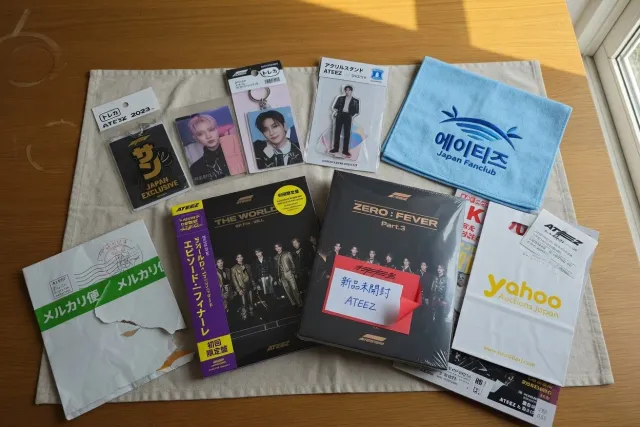
To buy ATEEZ merch from Japan, search Japanese resale and retail listings for official albums, photocards, concert goods, fan-club items, and collaboration releases, then use a shopping proxy to purchase and ship your items internationally. Check the listing photos, condition wording, included bonuses, seller details, and shipping restrictions before ordering — especially for random inclusions and limited Japanese benefits.
What ATEEZ merchandise can you buy from Japan?
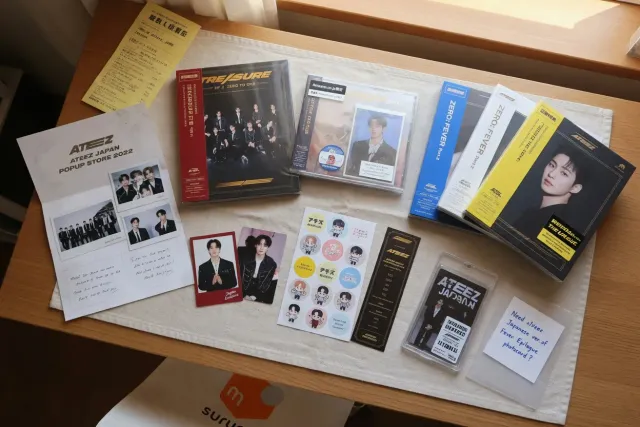
Japan is an especially useful market for ATINY collectors because it has both official Japanese releases and an active secondhand market. Japanese stores and individual sellers often list items long after an event, tour, pop-up shop, or album promotion has ended. This makes Japan a strong place to look for a single missing photocard, a complete album version, or older concert merchandise that is no longer available through official channels.
Common categories of ATEEZ merch from Japan include:
- Japanese albums and singles: regular editions, limited editions, member jackets, CD/DVD or Blu-ray bundles, and store-specific editions.
- Album inclusions: photocards, postcards, bookmarks, stickers, posters, lyric books, and serial-code inserts.
- Concert and fan-meeting goods: light sticks, acrylic stands, slogan towels, keyholders, plush items, trading card sets, photo sets, and apparel.
- Japanese fan-club merchandise: membership kits, seasonal greeting items, special magazines, postcards, and exclusive event goods.
- Pop-up and collaboration items: caf· merchandise, character collaborations, branded clothing, stationery, cosmetics, and limited retail campaigns.
- Member-specific collectibles: individual photocards, acrylic goods, badges, clear files, and photo cards featuring a particular member.
Availability changes quickly. A newly released item may appear in retail listings at its original price, while older or event-exclusive goods are usually found through resale listings. Start with the ATEEZ shopping hub to browse live Japan listings across supported stores and marketplaces in one place.
Where to find ATEEZ merch in Japan
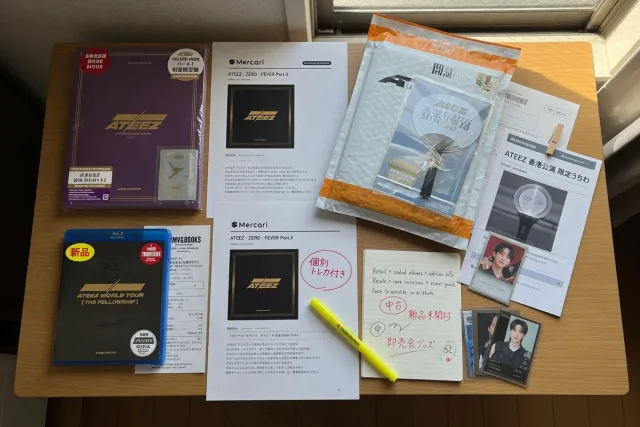
The best source depends on what you are collecting. New releases are commonly sold by Japanese retailers, while discontinued items, individual inclusions, and sold-out event goods are more likely to appear on resale platforms. Searching multiple sources matters because pricing, item condition, and included bonuses can vary substantially.
Retail listings for new and official releases
Japanese retail stores are useful for sealed albums, official DVDs and Blu-rays, books, and currently available merchandise. These listings may include edition details and manufacturer information, which can make it easier to confirm what is being sold. However, retail stock can disappear soon after a promotion ends, and store-specific purchase benefits are not always included once stock is replenished.
Resale listings for rare or individual items
Mercari Japan and JDirectItems Auction are particularly useful for collectors seeking single photocards, used concert goods, older albums, or bundles. Surugaya can also be useful for pre-owned character goods, music items, and collectibles. On resale sites, one seller may list an entire set while another sells each member separately, so compare both individual and bundle searches.
Resale listings can offer excellent value, but the listing title alone is not enough. Read the description and study the photos closely. A listing described as 未開封 is unopened, while 美品 generally means the seller considers the item to be in good condition. These are seller descriptions rather than universal guarantees, so photographs remain essential. For albums and books, 初版 means first edition or first pressing; it can matter to collectors, but only when the exact edition is relevant to the item you want.
How to search for ATEEZ merchandise in Japanese
Searching in English can find some results, but Japanese keywords often uncover more listings. Japanese sellers may use the group name in katakana, abbreviations, member names, or the name of a specific event. Try several keyword combinations rather than relying on one broad search.
Useful starting terms include:
- ATEEZ · the English group name is widely used in listing titles.
- エイティーズ · ATEEZ in Japanese katakana.
- アチズ · a common Japanese fan abbreviation.
- トレカ · trading card; commonly used for photocards.
- フォトカード · photocard.
- アクスタ · acrylic stand.
- 缶バッジ · can badge or pin badge.
- ライブ · live concert.
- 特典 · bonus or purchase benefit.
- 限定 · limited edition or limited item.
Combine these terms with the release name, event name, store name, or member name. For example, a collector looking for a Japanese album benefit might search the group name plus 特典 トレカ. Someone seeking acrylic merchandise could combine the group name with アクスタ. If results are too broad, add the tour name, album title, or a specific member.
Auto-translation is helpful for understanding listing descriptions, but do not depend on translation alone for condition-sensitive purchases. Compare translated text with listing photos, especially when the seller mentions flaws, missing inserts, packaging damage, or excluded bonuses.
How to check an ATEEZ listing before you buy
ATEEZ merchandise can look similar across editions, and many collectible items were sold with randomized inclusions. A careful review before purchase prevents the most common disappointments: receiving the wrong member, an album without its photocard, a duplicate item, or a listing that shows several products but sells only one.
Confirm exactly what is included
Check whether the listing is for the full item, a single inclusion, or a display image representing multiple variants. Look for wording such as ·one item,· ·random,· ·set,· ·complete,· or ·without bonus.· In Japanese listings, phrases such as 画像のものが全て indicate that everything shown in the photos is included. If a photocard is important, make sure it appears in the listing photos or is specifically stated in the description.
For albums, verify:
- the exact title and Japanese edition;
- whether it is sealed or opened;
- whether the photocard, serial code, poster, or store benefit is included;
- whether the item is one version, all versions, or a member cover;
- whether external packaging is included.
Review condition photos, not just condition labels
Photocards can be affected by corner wear, surface scratches, print marks, bends, discoloration, or marks visible only under angled light. Acrylic items may have scratches or missing protective film. Apparel and towels can have signs of use, while older paper goods may have creases or fading. Zoom in where possible and compare the front and back of cards.
Be particularly cautious with listings using stock photos, heavily filtered images, or photos that do not show the actual item. A lower price can be worthwhile for a used collection item, but only if you understand the condition being offered.
Understand bundles and duplicate items
Bundles are common on Japanese resale platforms. They can reduce the effective cost per item, but they may include duplicates, mixed members, or items you do not need. Before buying a large lot, calculate whether you would still be satisfied if a few pieces are not in collector condition. For member-focused collecting, single-item listings may be more efficient even when their individual prices are higher.
Buying limited Japanese ATEEZ releases and benefits
Japanese releases often have details that are easy to miss: multiple jackets, retailer benefits, lottery entries, event applications, and different included media formats. A title that appears identical at a glance may have several editions with different contents. Read the product title and version details carefully before adding it to your order.
Store benefits are especially important. A retailer bonus may be a photocard, postcard, clear file, coaster, or other small item offered during a specific campaign. On secondhand listings, the bonus may be sold separately from the album. Do not assume that a sealed album includes every original retailer benefit; many benefits were handed out separately at purchase.
Some Japanese releases include serial codes connected to campaigns, lotteries, or time-limited events. Their availability, eligibility, and validity can be restricted, and codes may already have been used in opened items. Buy a physical release because you want the release and its tangible inclusions, not because you expect access to a time-sensitive promotion.
For current official announcements about ATEEZ activities and releases, consult the group’s official channels before searching. Then use the ATEEZ listings page to compare available Japanese stock and resale offers.
Using a shopping proxy to buy ATEEZ merch from Japan
Many Japanese marketplaces are designed primarily for domestic buyers. A shopping proxy helps international fans purchase items from Japan by placing orders on their behalf, receiving items at a Japanese warehouse, and arranging international shipping after items are ready.
With JPFinds, you can search live listings from Mercari, JDirectItems/Yahoo Auctions, Amazon Japan, Surugaya, Minne, and other supported sources. This is useful when building an ATEEZ order from more than one seller or store. Instead of separately arranging domestic Japanese delivery for each purchase, you can bring eligible items together before selecting international shipping.
JPFinds uses a two-payment system. The first payment covers the item cost and applicable domestic purchase charges. After the items arrive and are prepared for dispatch, the second payment covers international shipping and related final charges. This structure is helpful for collectors because the final shipping amount depends on the packed parcel’s actual weight, dimensions, destination, and chosen carrier.
Before purchasing, consider the practical side of your order:
- Item size: a photocard set and a concert light stick have very different packing and shipping profiles.
- Fragility: albums, acrylic items, and framed goods may require careful packing choices.
- Seller location and shipping: domestic shipping fees may vary by listing.
- Combining purchases: consolidation can be useful when buying from several Japanese sellers.
- Carrier options: available international shipping methods differ by destination, parcel size, and restrictions.
Plan your ATEEZ order for better value
A thoughtful buying plan can make a major difference, particularly when collecting small items from multiple sellers. Start by separating ·must-have· items from items you would only buy at the right price. This helps avoid impulsive duplicate purchases when several similar listings appear.
For photocards and other small collectibles, compare the total order cost rather than the item price alone. A very inexpensive card may be less attractive if it adds a separate domestic shipping charge or if you are not purchasing anything else from that seller. Conversely, a slightly higher-priced bundle may be better value if it contains several cards you genuinely want.
For bulky items such as light sticks, albums, boxed figures, or apparel, consider whether the original outer box is essential to your collection. Packaging can add volume, and collector preferences differ. Never ask a seller to separate an item from packaging unless you are comfortable with the potential effect on collectibility and condition.
Keep a simple collection checklist with the item name, member, release, version, desired condition, and maximum budget. This is particularly useful for Japanese benefits and tour goods because listings may use different names for the same release. Saving searches for both English and Japanese terms can also help you spot newly listed items before they disappear.
Related guides: explore more official group goods through the ATEEZ collection hub.
Common mistakes to avoid when buying ATEEZ merch from Japan
- Assuming a card is included with an album: opened albums are often sold without photocards or benefits.
- Buying from a group photo without reading the quantity: the pictured collection may be illustrative, while the sale is for one item only.
- Confusing official and fan-made goods: handmade or unofficial items may be clearly labeled, but review the brand and photos if official merchandise is your goal.
- Overlooking version details: Japanese releases may have regular, limited, member, and retailer-exclusive versions.
- Ignoring condition notes: a card can be authentic but still have wear that matters to a collector.
- Waiting too long on a good resale listing: one-of-one used listings can sell quickly, especially for popular members or limited benefits.
- Forgetting shipping practicality: adding a large low-priority item can change the size and cost profile of an otherwise compact order.
Buying ATEEZ merch from Japan is easiest when you treat every listing as a specific collectible, not simply a product title. Confirm the version, inclusions, condition, and total order plan first; then use a proxy service to purchase from Japanese sellers and arrange shipping that fits your destination and collection goals.