
Consolidation lets you combine several separate TWICE purchases into one international parcel after they arrive at the JPFinds warehouse. Instead of paying international shipping for every album, photocard, or piece of merchandise individually, you can group eligible items, select a shipping method, and pay the international shipping charge for the finished parcel. It is especially useful when buying from several Japanese stores or sellers.
What consolidation means for multiple TWICE purchases
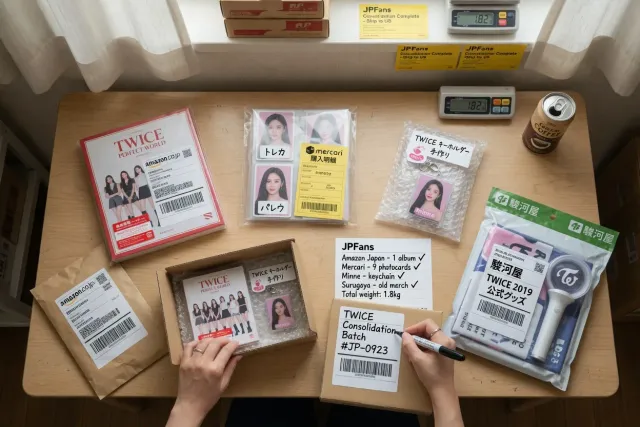
When you shop for TWICE goods in Japan, the items you want are often scattered across different marketplaces. A preorder bonus may be available from one shop, an older album from another seller, and a concert accessory from a third listing. Consolidation is the process of bringing those individual purchases together at one warehouse before they are sent overseas.
For example, a collector might place separate orders for:
- One Japanese-edition TWICE album from Amazon Japan
- A set of member photocards from Mercari
- A fan-made keychain from Minne
- Older official merchandise from Surugaya
Each order is purchased separately because it comes from a different seller or shop. Once the purchases reach the warehouse, they can be prepared as a combined shipment rather than forwarded one at a time. This is often more practical for fans building a haul over several days or weeks.
Consolidation does not turn multiple store transactions into one store order. Each seller is still paid separately, and each listing has its own availability, domestic shipping charge, and seller handling process. What changes is the international leg of the journey: your items can leave Japan together in one parcel.
Browse current Japanese listings through the TWICE shopping hub when you want to collect multiple items before arranging a combined shipment.
How the JPFinds two-payment flow fits consolidation
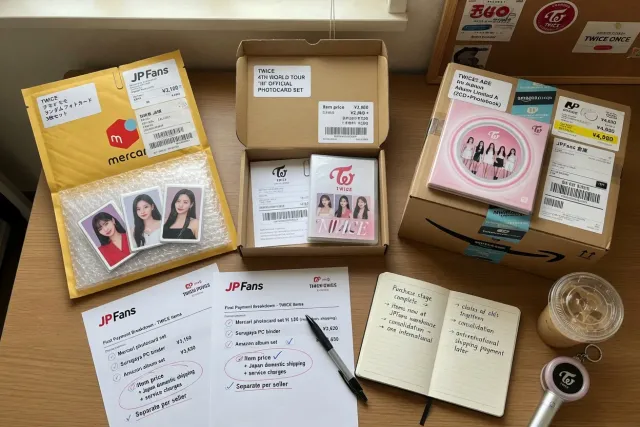
Consolidation is easiest to understand when you separate the purchase stage from the international shipping stage. JPFinds uses a two-payment system, so the cost of obtaining your TWICE items and the cost of sending the completed parcel abroad are handled at different points.
First payment: purchasing the individual items
The first payment covers the costs connected with placing each purchase. Depending on the listing and marketplace, this can include the item price, Japan domestic shipping, and applicable service charges. Since every seller and store can have different terms, the total for a photocard listing may look very different from the total for a boxed album set.
For consolidation, it is normal to make several first payments. You may win a JDirectItems/Yahoo Auctions listing one day, purchase an album from Amazon Japan the next day, and later buy merchandise from Mercari. These remain separate purchases even if your goal is to ship them together later.
Second payment: international shipping after grouping items
After the items have arrived and you are ready to send them, the second payment covers international shipping and any charges associated with preparing the outgoing parcel. The final amount depends on practical factors such as parcel weight, dimensions, destination, chosen carrier, and the way the items are packed together.
This is why consolidation can be helpful: a single combined parcel may avoid repeating the international shipping process for every small purchase. It does not guarantee that one large box will always cost less than several smaller ones, because carrier pricing can be affected by both actual and dimensional weight. However, combining compatible items generally gives you more control over how your international shipping is organized.
Which TWICE items are practical to combine
Many common TWICE purchases can be combined effectively, but the best grouping depends on size, weight, and fragility. Think about the physical shape of each item before adding it to a growing shipment.
Albums, DVDs, Blu-rays, and magazines
Flat media items are usually straightforward additions to a consolidated parcel. Albums, Japanese magazines, photo books, DVDs, and Blu-rays can be grouped with other flat goods, though a larger collection becomes heavy quickly. Limited editions may include bulky boxes, posters, acrylic goods, or multiple inclusions, so their dimensions can matter more than the listed item count.
If a listing mentions condition terms such as 未開封 (unopened), 美品 (excellent condition), or 初版 (first edition), treat those as details of that individual listing. Consolidation helps with shipping organization; it does not change the seller’s stated condition or replace your need to read photos and descriptions before purchasing.
Photocards and small collectibles
Photocards, trading cards, badges, small acrylic stands, charms, and similar collectibles are popular consolidation items because each one may be inexpensive while international shipping for a single item can be comparatively inefficient. Combining several small purchases into one parcel can make more sense than shipping them as they arrive.
For cards, consider whether you are also adding heavy items. A compact shipment of cards and small goods may suit one carrier option, while adding several albums may change the parcel’s size and weight category. Keep purchases grouped around a realistic shipment plan rather than assuming every item should go into the same box.
Large, delicate, or irregularly shaped merchandise
Light sticks, framed items, oversized plush, display stands, large boxes, and bundled merchandise deserve extra planning. They can increase parcel dimensions substantially or need more protective space than flat items. Adding a single oversized item to an otherwise compact photocard shipment can change the most sensible shipping option.
Before buying, review the listing photos and measurements where available. A low item price does not necessarily mean a low overall cost once domestic shipping, parcel size, and international shipping are considered.
A practical order plan before you start buying
A little planning prevents a collection of unrelated purchases from becoming difficult to ship. Start by deciding what kind of TWICE haul you are building: a small card-focused parcel, an album order, a concert-merchandise package, or a mixed collection. Then set a rough item budget and a separate shipping reserve.
A useful approach is to make a simple list with the following information:
- Item name and member, unit, era, or release
- Marketplace or store
- Item price and stated domestic postage
- Approximate size and whether the item is fragile
- Whether the purchase is essential or a lower-priority add-on
- Whether it is ready to buy, an auction, or a preorder
This list matters because different marketplaces operate differently. A fixed-price Mercari listing can disappear quickly, while an auction may require you to wait for the end time. Retail stores may have stock changes or preorder release dates. Your consolidation plan should allow for these different arrival patterns instead of assuming every item will reach the warehouse at once.
Use the TWICE listings page to compare live results across supported Japanese sources and identify which purchases belong in the same shipment plan.
Timing your purchases so they can be shipped together
The central timing issue is arrival at the warehouse. An item cannot be included in a combined shipment until it has been purchased and delivered there. The time between purchase and arrival may vary by seller, marketplace, weekends, holidays, preorder dates, and domestic shipping method.
For that reason, buy time-sensitive or hard-to-find items first. A rare member photocard with a competitive listing may not still be available after you finish researching every other item. Conversely, readily available retail albums can often be added later if they remain in stock.
Preorders require particular care. An item that releases later cannot join an outgoing parcel until it is released and reaches the warehouse. If you need other purchases sooner, it may be more sensible to make two shipments rather than waiting indefinitely for one future release. Consolidation is a tool for balancing cost and convenience, not a requirement to ship everything together.
It is also wise to avoid making last-minute assumptions about auction items. If you are bidding on a JDirectItems/Yahoo Auctions listing, you may not win it, or the seller’s dispatch timing may differ from other orders. Keep a backup plan: ship the items already received together, or add another purchase if it arrives in time.
Choosing a parcel strategy: one box or separate shipments
The best consolidation decision is not always ·put everything in one package.· Consider the content of your haul and your destination’s carrier options. JPFinds offers multiple international carrier choices, and the available services and pricing can differ by destination and parcel characteristics.
When one combined shipment makes sense
One parcel is often a strong option when your purchases are similar in size and ready around the same time. Examples include several albums plus photocards, a set of small acrylic goods, or multiple pieces of merchandise from different sellers. Grouping them can simplify tracking and reduce the number of separate international shipments you manage.
When splitting can be the better choice
Separate parcels may be more appropriate when one item is unusually large, fragile, or heavy; when one purchase is delayed; or when you want a smaller card-focused parcel apart from boxed merchandise. Splitting can also help you manage declared contents and local import requirements more clearly, depending on your destination.
Do not choose a shipping method based only on the lowest-looking rate. Review the carrier options available for your destination, the parcel’s dimensions, tracking preferences, and any destination-specific restrictions. The right choice is the one that fits the final package, not necessarily the one that worked for a previous order.
Packaging, declarations, and cost factors to keep in mind
Consolidation changes the physical package, so packaging and customs details should be part of the decision. Albums may need protection against corner pressure, photocards should not be loose among heavy items, and acrylic items can be vulnerable to bending or scratches if packed with unsuitable objects. Combining items is most efficient when the shipment is built around compatible contents.
International shipping prices are commonly influenced by actual weight and parcel dimensions. A large empty retail box, plush item, or collector’s edition can take up significant space even if it is not particularly heavy. Meanwhile, many individual photocards weigh very little but may be best sent with rigid protection. The final parcel configuration matters more than the number of listings you bought.
For customs, provide accurate information requested during the shipping process. Import tax, VAT, duties, customs thresholds, and restricted-item rules are set by the destination country and can change. A consolidated parcel may have a higher declared total than one small purchase, so make sure you understand your country’s rules before dispatching it.
If you are collecting official releases, announcements and artist information can be checked through TWICE’s official website. This can be useful for confirming release names and merchandise lines before searching Japanese listings.
Common consolidation mistakes TWICE collectors can avoid
- Buying without a shipment plan: Small bargains can add up to a bulky, mixed parcel. Track what you buy and why it belongs in the same shipment.
- Forgetting domestic shipping: Japanese domestic postage is part of the cost of each separate purchase and may vary significantly by seller.
- Waiting on one uncertain item: A future preorder or auction result can delay an otherwise ready group of purchases.
- Mixing fragile and heavy goods without thinking ahead: Albums, boxed goods, and delicate collectibles may need different space and protection considerations.
- Assuming all small items create a cheap parcel: A large quantity of albums, magazines, or packaging can raise weight and dimensions quickly.
- Ignoring destination rules: Your local customs charges and carrier availability can affect the best way to group and send your order.
The most effective approach is simple: purchase the items you genuinely want, wait until the intended group has arrived, then choose whether one consolidated shipment or two smaller parcels better suits the actual contents. That gives you flexibility while still taking advantage of Japan’s wide range of TWICE listings.