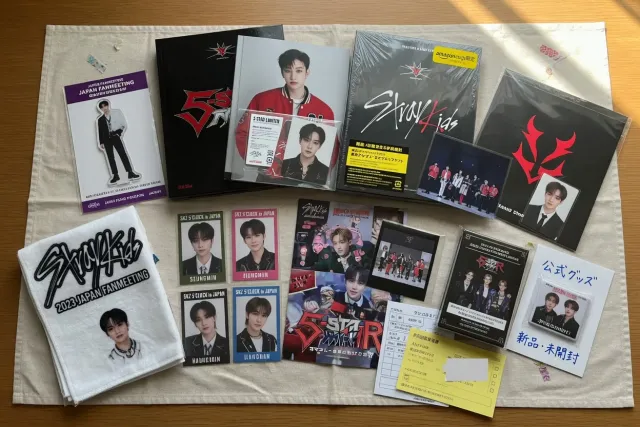
Stray Kids member, album, and event goods can be found by searching with the right member names, Japanese item terms, release details, and event labels. The most useful approach is to separate official merchandise into three groups: member-specific goods such as photocards and acrylic stands, album inclusions and purchase benefits, and event merchandise from concerts, fan meetings, pop-ups, and Japanese promotions.
Understand the main types of Stray Kids goods
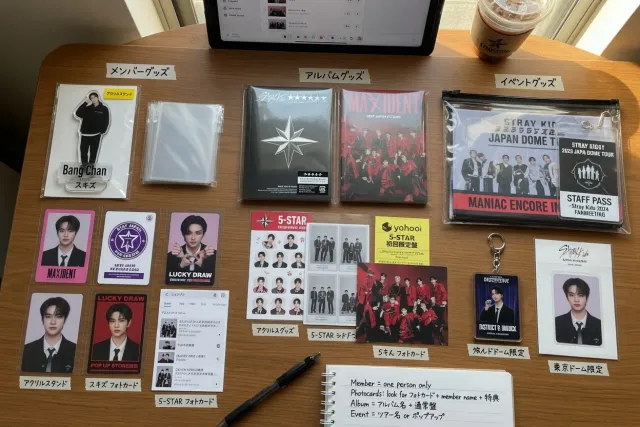
Stray Kids merchandise is broad, and listings can look similar even when the items came from completely different releases. Before searching, decide whether you are looking for a particular member, an album-related collectible, or merchandise tied to a specific event. This makes it much easier to use relevant Japanese search terms and avoid purchasing an item that only resembles the release you want.
Member-specific goods
Member goods are items featuring one individual member rather than the full group. The most commonly collected categories include:
- Photocards: album inclusions, store benefits, fan-club benefits, event-entry cards, lucky draws, and limited campaign cards.
- Acrylic stands: often called acsta in Japan, these display figures are frequently released for tours, pop-ups, anniversaries, and fan meetings.
- Character goods: SKZOO plush, mini plush, keychains, pouch charms, apparel, and stationery associated with each member's character.
- Can badges and trading items: randomly packed pins, clear cards, trading cards, and mini photos that are commonly sold individually after fans open a full set.
- Photo books and magazines: member covers, solo pages, official printed photos, and special publication benefits.
Japanese listings may identify members by their stage name, Korean name, nickname, or character name. Search results are usually stronger when you try several variants. For example, a listing may say ·バンチャン· for Bang Chan, ·リノ· for Lee Know, ·チャンビン· for Changbin, ·ヒョンジン· for Hyunjin, ·ハン· for Han, ·フィリックス· for Felix, ·スンミン· for Seungmin, or ·アイエン· for I.N.
Album-related goods
Album goods include more than the album itself. A listing could contain an unopened Japanese edition, an album with selected inclusions, a store-exclusive benefit, or a card separated from its original package. When looking for a particular release, identify the album title, edition, country of release, and whether the item is a standard inclusion or a purchase bonus.
For example, a Japanese album can have different benefits depending on where it was purchased. Tower Records, HMV, Sony Music Shop, fan-club stores, and concert venues may distribute different cards or bonus items. A card described as a ·店舗特典· (store benefit) is not necessarily included inside every album; it may have been offered only through a particular retailer or campaign.
Event goods
Event goods are merchandise connected to a date, venue, tour, fan meeting, exhibition, pop-up store, or promotional campaign. These releases are especially important to collectors because the artwork, packaging, and availability may be tied to one event period. Typical examples include tour T-shirts, towels, light-stick accessories, venue-limited cards, fan-meeting trading cards, pop-up acrylic stands, and Japan-only campaign bonuses.
Search by member name and Japanese merchandise terms
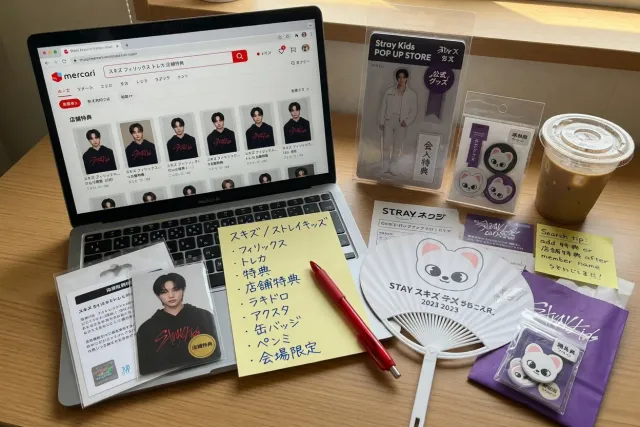
Japanese marketplaces reward specific searches. A broad English search such as ·Stray Kids Felix card· can find some results, but a Japanese phrase often reveals more individual listings, bundles, and older merchandise. Start with the group name ·Stray Kids· or ·スキズ,· then add a member name and the item type.
Useful Japanese terms include:
- トレカ · trading card or photocard
- 特典 · bonus or benefit
- 店舗特典 · retailer/store benefit
- 購入特典 · purchase bonus
- ラキドロ · lucky draw
- アクスタ · acrylic stand
- 缶バッジ · can badge / pin badge
- うちわ · concert fan
- ペンミ · fan meeting
- ポップアップ · pop-up store
- 会場限定 · venue limited
- 公式 · official
A focused query might be ·スキズ フィリックス トレカ 店舗特典· for a Felix store-benefit photocard, or ·Stray Kids アクスタ ペンミ· for acrylic stands connected to a fan meeting. Add an album title, tour name, year, or retailer when you know it. This reduces unrelated results and helps distinguish similar-looking releases.
For a wider starting point, browse the dedicated Stray Kids shopping hub, then refine your searches by member, event, or item category.
Identify album versions, inclusions, and purchase benefits
Album collecting can become confusing because one title may exist in Korean, Japanese, standard, limited, member-specific, and retailer-exclusive editions. The outer packaging alone does not always tell you whether all original contents are still present. Read the description carefully and compare the listing photos with the release information you have.
What may be included with an album listing
A complete album can include a CD, photobook, lyric booklet, folded poster, sticker sheet, postcard, photocard, unit card, or other random insert. However, secondhand listings often state that selected inclusions are missing. Phrases such as ·トレカなし· mean ·no photocard,· while ·付属品なし· means accessories or included items are absent.
For collectors seeking sealed albums, the Japanese term 未開封 means unopened. This can be useful when the original random inclusions matter. It does not guarantee a specific member card unless the listing explicitly identifies the contents or the release was sold with a member-specific package. If a listing says 美品, it generally means the seller considers the item to be in good condition, but photos remain important for corners, surfaces, seals, and packaging wear.
Store benefits and preorder bonuses
Store benefits are among the most sought-after album goods because they can feature exclusive photography or limited designs. In Japan, sellers may list these cards separately after buying multiple copies of an album. Look for retailer names in the title or description, and do not assume every ·特典· card came from the same campaign.
When comparing two similar cards, check the background color, outfit, logo placement, back design, campaign name, and release period. A small visual difference can indicate a different retailer benefit or a later reprint. Official release notices from the group’s official Stray Kids website can also help establish which albums, events, and promotions existed.
Find goods from concerts, fan meetings, and pop-up events
Event merchandise is best searched with a specific event identifier. A tour name is more useful than simply searching ·concert goods,· while a city, season, or year can separate one run of merchandise from another. Japanese event goods are often resold after the event ends, particularly random trading items and bulky items that fans no longer display.
Common event-related categories include:
- Tour shirts, hoodies, caps, and tote bags
- Official light-stick accessories and straps
- Venue or ticket-holder bonuses
- Fan-meeting photo sets and trading cards
- Pop-up store acrylic stands, clear files, charms, and badges
- Japanese fan-club and anniversary merchandise
- Exhibition or themed-campaign goods
Use ·会場限定· for venue-limited goods, but read carefully: sellers sometimes use the term loosely for merchandise purchased at an event venue rather than an item exclusively distributed there. Likewise, ·イベント· can refer to a signing event, a release campaign, a pop-up, or a concert. Add the exact event title whenever possible.
For random items such as trading cards and badges, verify whether the listing is for one selected member, a full set, or an unopened pack. ·コンプ· or ·コンプリート· usually indicates a complete member set, while ·まとめ売り· means a bundle sale. These terms are helpful when you are trying to collect all eight members or find several items from the same event in one listing.
Check listing details before choosing a collectible
Photos, descriptions, and release identifiers matter more than a short title. Many official goods use similar images across different campaigns, and a photocard may have multiple versions with nearly identical poses. Before selecting an item, confirm the member, event or album name, item type, quantity, and visible condition.
Details to compare for photocards and paper goods
- Front and back design, including logos and printed text
- Whether the item is an album inclusion, retailer benefit, lucky draw, or event bonus
- Member name and whether it is a solo, unit, or group image
- Any stated marks, bends, dents, edge wear, discoloration, or sleeve damage
- Whether protective sleeves, backing cards, or original packaging are included
- Whether the listing is for one card or several cards shown in the photos
For acrylic stands, plush, apparel, and larger event goods, examine the base, printed surface, box, tags, and accessories. A missing stand base or detached ball chain can affect how the item is displayed, even if the main piece is present. For apparel, check the listed size and whether the item has been worn or washed.
When an item is described as 初版, it means first edition or first pressing. This is most relevant when a release had later production runs, altered packaging, or a collectible distinction between early and later versions. It is not automatically a sign that every included random item is rarer, so match the claim to photos and release information.
Build a practical search list for your collection
A simple collection list prevents duplicate purchases and helps you recognize the exact item you still need. It is especially useful for members with frequent Japanese benefits, or for events that released multiple random designs.
For each target item, record:
- Member or unit
- Album, tour, pop-up, or event name
- Country or market, such as Japan or Korea
- Item category and approximate size
- Retailer or campaign source, if applicable
- Key visual details, such as outfit, background, and logo
- Whether you want an unopened item, a complete set, or a single member item
This list can be as simple as a notes app, spreadsheet, or photo reference folder. For album benefits, save the official promotional image and label it with the retailer. For event goods, note the event year because similar merchandise may return with revised designs in later tours.
Once you know what you are targeting, visit the Stray Kids collection page to search live Japanese listings across relevant stores and marketplaces. You can pay for the item purchase first, then arrange international shipping after your purchases are consolidated, with carrier options available for different destinations and preferences.
Use release context to avoid confusing similar goods
Stray Kids has official merchandise across Korean promotions, Japanese releases, global tours, fan-club activities, collaborations, and character lines. A listing may be official while still not belonging to the album or event you had in mind. The safest way to avoid mix-ups is to connect every item to its release context.
Ask three questions: What campaign did this come from? How was it originally distributed? What exact member or design variant is shown? These questions help separate an album inclusion from a preorder card, a venue bonus from standard tour merchandise, or a SKZOO item from a member-photo item.
Be especially careful with terms such as ·Japan limited,· ·FC,· ·official,· and ·rare.· They can be meaningful, but they are broad labels rather than complete identification. A well-documented listing should still show the actual item and provide enough wording to connect it to a release. When details are sparse, compare the photos against known official artwork, packaging, and event materials before making a choice.
Related guides: explore more official releases and collectible categories through the Stray Kids hub.