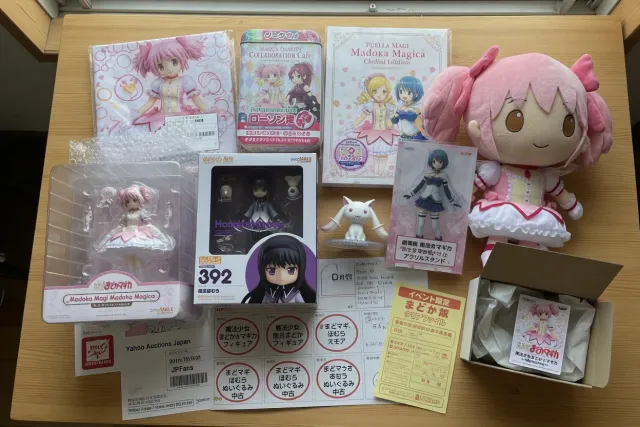
To find Madoka Magica figures, plushies, and limited-edition goods, search Japanese listings with both English and Japanese character names, check several store categories, and learn to recognize event, lottery, collaboration, and prize releases. Japan’s resale market is especially useful for discontinued merchandise, from scale figures and Nendoroids to character plush, acrylic stands, art books, and campaign-exclusive items.
Start with the major types of Madoka Magica merchandise
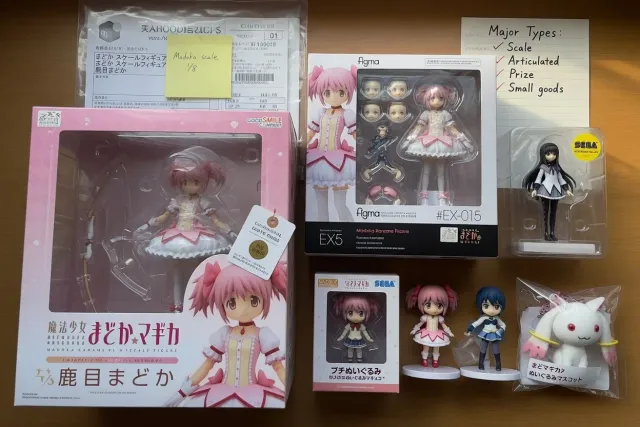
Puella Magi Madoka Magica has been collected for more than a decade, so the range of goods is unusually broad. Knowing which category you want makes searches more productive and helps distinguish a genuinely scarce item from an older but commonly available release.
Figures: scale, articulated, prize, and small collectibles
Figures are often the centerpiece of a Madoka collection. Scale figures are typically larger, more detailed releases produced for collectors, while articulated lines let you pose characters with accessories. Smaller trading figures, chibi lines, and capsule toys are generally easier to display in groups.
- Scale figures: Look for character-specific releases of Madoka Kaname, Homura Akemi, Mami Tomoe, Sayaka Miki, Kyoko Sakura, Nagisa Momoe, and Ultimate Madoka. Older scales may appear sporadically on the resale market.
- Nendoroid and articulated figures: These commonly include alternate faces, weapons, Soul Gems, or magical-girl effects. Check that the listing photos show the parts you care about.
- Prize figures: Arcade and crane-game prizes are usually more affordable and can include unusual costumes, seasonal themes, or movie-era artwork.
- Trading figures and mini figures: Blind-box, deformed, and small-display series are useful for collecting an entire cast without requiring much shelf space.
Brand names can be valuable search filters. Good Smile Company, Banpresto, Kotobukiya, Aniplex, Sega, and FuRyu have all been important names in anime collectibles. For current manufacturer information and official announcements, consult the Good Smile Company homepage alongside product packaging details.
Plushies and soft goods
Madoka Magica plush merchandise ranges from standard character dolls to mascot-style designs, beanbag plush, keychain plushies, and small crane-game prizes. Search for plushies by size as well as character: a desk-sized mascot, an oversized character plush, and a bag charm may all use different Japanese product terms.
Kyubey merchandise deserves its own attention. Because the mascot appears in many collaborations, it is often sold under character, mascot, or collaboration names rather than in a straightforward ·Madoka Magica plush· category. Incubator-themed items can include plush toys, pouches, cushions, keychains, and novelty goods.
Use Japanese names and search terms for better results
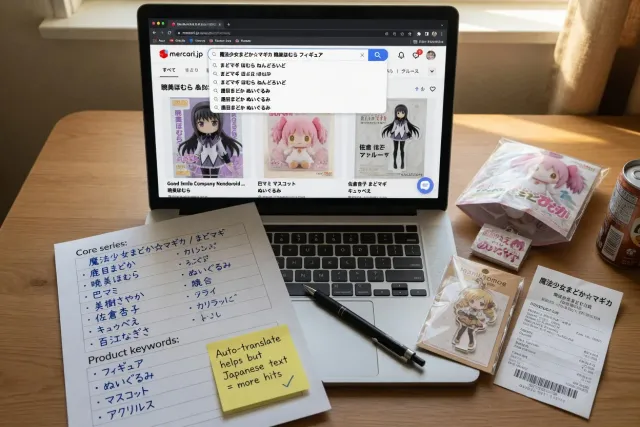
English searches can surface some listings, but Japanese keywords uncover far more inventory. Begin with the series title, then add a character name, product category, manufacturer, store campaign, or condition term. Auto-translation is helpful, but entering Japanese text directly remains one of the best ways to find narrowly described listings.
Core series and character keywords
- 魔法少女まどか☆マギカ · Puella Magi Madoka Magica
- まどマギ · common shortened title
- 鹿目まどか · Madoka Kaname
- 暁美ほむら · Homura Akemi
- 巴マミ · Mami Tomoe
- 美樹さやか · Sayaka Miki
- 佐倉杏子 · Kyoko Sakura
- キュゥべえ · Kyubey
- 百江なぎさ · Nagisa Momoe
Useful product-category keywords
- フィギュア · figure
- ぬいぐるみ · plushie
- マスコット · mascot plush or small mascot item
- アクリルスタンド or アクスタ · acrylic stand
- 缶バッジ · can badge/pin
- クリアファイル · clear file
- タペストリー · tapestry
- ポスター · poster
- 一番くじ · Ichiban Kuji lottery goods
- 限定 · limited edition
- 特典 · bonus item or purchase benefit
Combine terms rather than searching a single broad phrase. For example, try ·まどマギ フィギュア·, ·暁美ほむら ぬいぐるみ·, ·まどマギ 一番くじ·, or ·鹿目まどか 特典·. If a listing uses a franchise abbreviation, try both the complete title and ·まどマギ.·
Know where rare and discontinued goods tend to appear
Different kinds of Madoka merchandise circulate through different Japanese retail channels. Checking multiple sources matters because one seller may list a discontinued figure while another specializes in low-cost prize goods, campaign items, or bundles of smaller merchandise.
Live listings from Mercari and JDirectItems Auction are especially worth monitoring for pre-owned collectibles, older releases, duplicate lottery prizes, and single items separated from sets. Amazon Japan can be useful for items still in retail circulation, while Surugaya frequently carries secondhand anime merchandise across figures, character goods, media, and hobby categories. Minne may occasionally offer fan-made accessories, display items, or handmade pieces inspired by collector needs; always read listings carefully to understand whether an item is official merchandise or creator-made work.
Browse the Madoka Magica collection hub to compare currently available goods across Japanese sources. When a rare item is a priority, save several searches instead of relying on one exact phrase. Sellers may omit a character name, use an abbreviation, or list an item as part of a mixed anime-goods lot.
Release types that can be harder to locate
Some merchandise is scarce because it was never widely sold at standard retail. These categories deserve extra patience and more specific searches:
- Event goods: Merchandise sold at anime conventions, exhibitions, pop-up shops, or anniversary events may have event names printed on packaging or included in listing titles.
- Store purchase benefits: Retailers may give away postcards, clear files, bromides, shikishi boards, or other bonuses with a qualifying purchase. Search with 特典 and the relevant shop or campaign name.
- Ichiban Kuji prizes: Lottery releases can include figures, plushies, towels, art boards, and last-prize items. ·ラストワン賞· is the term for a final prize.
- Collaboration goods: Cafés, apparel labels, games, museums, and other brands can issue short-run collaborative art and practical goods.
- Movie and anniversary merchandise: Items connected to Rebellion, Walpurgisnacht: Rising, or major anniversaries may be cataloged by campaign title rather than by the core series name.
Identify limited editions, exclusives, and first-release details
·Limited edition· can mean several different things in Japanese listings. It may refer to a convention-exclusive product, a store-exclusive bonus, a limited production run, or simply a seller’s informal description of an item that is no longer made. Read the entire listing and inspect photos of the box, label, inserts, and included accessories before assuming an item is exclusive.
For figures, useful listing language includes 限定版 (limited edition), 店舗限定 (store exclusive), イベント限定 (event exclusive), and 初版 (first edition/first release). A first-release version can matter when a figure received a later reissue with different packaging, colors, included parts, or pricing. However, ·初版· is not automatically better; compare the actual release details and choose the version you prefer.
For paper goods and bonuses, look for signs of a complete set. A listing for an acrylic stand may be a single character from a multi-character campaign, while a ·complete· lottery set can still exclude the most desirable figure or last prize. Ask yourself whether you want a specific character, every design in a collection, or just one representative item.
The official Puella Magi Madoka Magica website is a useful reference point for franchise announcements and official visual identity. It can help when comparing artwork, logos, and campaign information, though older merchandise may no longer be featured there.
Read condition notes and listing photos carefully
Secondhand listings are an excellent route to discontinued Madoka Magica goods, but condition descriptions should guide your choices. The Japanese terms below are common, yet photos and seller notes remain more important than a short label.
- 未開封 · unopened. This normally means the product packaging has not been opened, but outer-box wear may still be present.
- 美品 · item in very good condition. It is subjective, so inspect images for scratches, fading, stains, bent corners, or missing pieces.
- 開封済み · opened.
- 箱なし · no box, particularly relevant to figures.
- 現状品 · sold in its current condition, often with limited guarantees about completeness or wear.
- まとめ売り · bundle sale.
For figures, verify the base, support arms, interchangeable hands or faces, weapons, and any bonus parts. For plushies, look for discoloration, flattened stuffing, loose tags, odors mentioned in the description, or marks around light-colored fabric. For acrylic stands and paper goods, check for protective film, edge wear, scratches, bends, and whether an original sleeve is included.
Packaging can influence collectibility, especially for premium figures and retail-exclusive releases, but it should not override your display goals. A boxless figure in excellent display condition may be a better fit than a sealed example with significant box damage if you intend to display it rather than keep it packaged.
Build an efficient search and collection plan
A focused plan prevents a large franchise from becoming overwhelming. Start with a collecting theme: one character, one artwork style, one merchandise format, one film era, or a color-coordinated display. A Homura-focused shelf, for example, could combine an articulated figure, a clear file, a Kyubey accessory, and one event acrylic stand without requiring every item ever produced.
Create saved searches with variations
Use both broad and narrow search combinations. A broad saved search such as ·まどマギ フィギュア· catches unexpected listings, while narrow searches such as ·アルティメットまどか フィギュア· or ·悪魔ほむら アクスタ· target specific versions. Add manufacturer names when you know them, but remove them occasionally so you do not miss listings with incomplete titles.
For limited goods, include the format and release context: ·まどマギ 展示会·, ·まどマギ カフェ·, ·まどマギ 限定·, or ·まどマギ 購入特典.· Search individual character names separately because sellers often title a listing only with the featured character.
Set priorities before placing orders
Decide which attributes are non-negotiable: sealed condition, original box, a complete set of accessories, a specific illustration, or a maximum display size. This helps when several similar listings appear. For mixed lots, calculate whether you genuinely want enough pieces to justify the bundle rather than purchasing it only for one item.
With JPFinds, you can place orders from Japanese listings, then consolidate eligible purchases for international shipping. The service uses a two-payment system: you pay for the item-related order first, and later pay the international shipping charge once your package is ready to send. Multiple carrier options may be available depending on the destination and parcel details.
Return to the Madoka Magica hub regularly as listings change. Older franchise goods can appear unpredictably, and consistency is often more effective than trying to locate every rare item in a single search session.
Display and preserve your Madoka Magica collection
Once you find your items, a few practical habits will help preserve them. Keep figures away from prolonged direct sunlight, heat sources, and high humidity; these can affect paint, plastic, and packaging over time. Acrylic stands and clear files benefit from sleeves or folders, while plushies stay fresher when displayed away from dust and strong light.
For a cohesive display, group goods by character color or by format. Madoka’s pink palette, Homura’s dark purple designs, Mami’s yellow accents, Sayaka’s blue, and Kyoko’s red can create an immediately recognizable arrangement. Alternatively, build a timeline shelf that moves from the original television series through movie artwork, anniversary designs, and newer releases.
Keep a simple inventory with product name, release type, condition, included parts, and purchase date. This is particularly helpful for figures with many small accessories and for lottery or event collections that contain visually similar items. It also makes it easier to avoid buying duplicates when a long-sought listing finally appears.