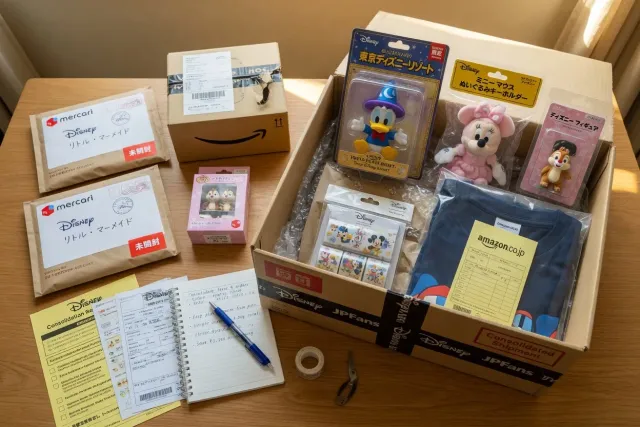
Disney package consolidation lets you combine eligible Disney purchases from Japan into one international parcel instead of shipping each order separately. This can reduce repeated shipping charges, simplify tracking, and make it easier to send figures, plush, stationery, apparel, and other character goods together. The key is planning purchases around size, weight, release timing, and the protection each item needs.
What Disney package consolidation means
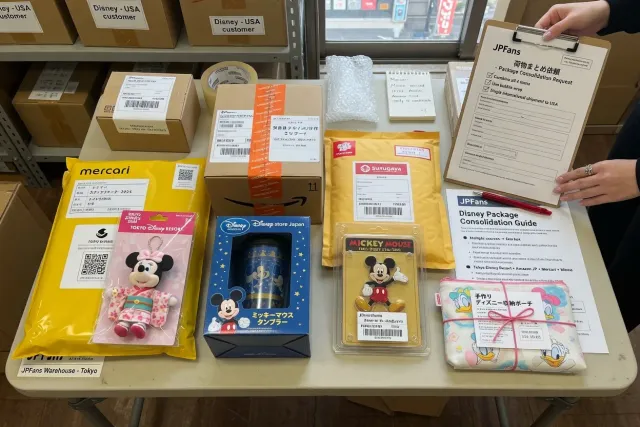
Package consolidation is the process of gathering multiple purchases into a single shipment after they arrive at a Japan-based warehouse. Rather than paying international postage separately for every Disney item, you can request that available purchases be packed together and sent to your address as one parcel.
For Disney fans shopping in Japan, consolidation is especially useful because collections are often built from several sources. You may find a Tokyo Disney Resort souvenir on Mercari, a vintage Mickey item through JDirectItems Auction, a new Disney Store Japan release on Amazon Japan, and handmade Disney-inspired storage accessories on Minne. Sending every item individually can be inconvenient and may create unnecessary packaging and carrier charges.
With Disney shopping from Japan through JPFinds, you can browse live listings across supported Japanese marketplaces, place orders, and decide when it makes sense to combine the purchases that have reached the warehouse.
Consolidation does not make every shipment cheaper in every situation. International shipping is based on factors such as actual weight, parcel dimensions, destination, carrier rules, and the final packing configuration. It is most effective when several items can share one appropriately sized carton without creating excessive dimensional weight or increasing the risk of damage.
When consolidating Disney purchases is a good idea
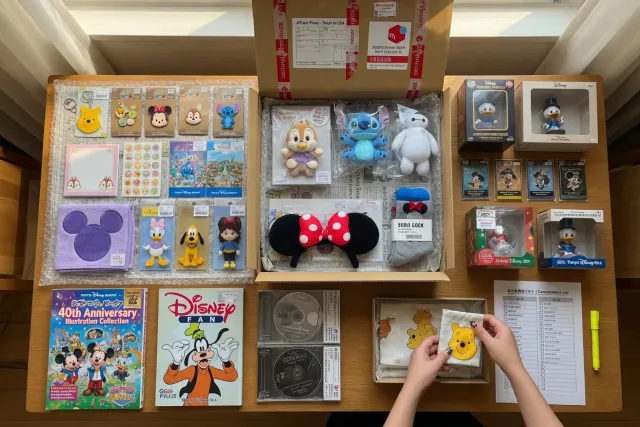
The best consolidation strategy depends on what you collect. Small, durable items are generally easy to group, while large or fragile products require more careful planning.
Good candidates for a combined parcel
- Small character goods: keychains, badges, pins, memo pads, stickers, postcards, towels, socks, pouches, and acrylic stands.
- Plush and soft goods: Nuimos outfits, compact plush toys, fabric accessories, hats, and folded apparel.
- Boxed collectibles: small figures, blind-box items, trading goods, ornaments, and display pieces with sturdy retail packaging.
- Books and media: Disney art books, Japanese magazines, soundtrack CDs, and DVDs, provided their combined weight remains practical.
- Multiple purchases from one collecting theme: for example, a Duffy & Friends order containing stationery, charms, costume pieces, and several compact plush items.
Items that may need separate shipment planning
Some Disney items can still be consolidated, but combining them is not always the most efficient or safest choice. Large plush, framed art, long umbrellas, oversized park popcorn buckets, fragile glassware, ceramic mugs, and large display boxes can require substantial outer cartons. A single bulky item may create a parcel whose size matters more than its weight.
Similarly, a heavy Disney book bundle can become expensive if you add large but light plush toys that increase the box dimensions. In this case, two thoughtfully planned parcels may be more sensible than forcing all purchases into one carton.
If you are buying collectible goods, review listing photos and descriptions before ordering. Terms such as 未開封 (unopened), 美品 (item in very good condition), and 初版 (first edition) can be useful when they are relevant to the item, but they describe the seller’s listing and do not replace your own review of photos, condition notes, missing accessories, or box wear.
How to plan Disney orders before requesting consolidation
Good consolidation starts before checkout. Make a short list of your intended purchases and separate them by category: fragile, boxed, soft, heavy, oversized, and time-sensitive. This helps you avoid a common problem: adding one awkwardly shaped item that forces every other purchase into a much larger parcel.
Build a practical purchase group
A useful approach is to create one main shipment theme. For example, a collector preparing for a Disney Halloween release might combine compact seasonal plush, pins, a shopping bag, stationery, and costume accessories. These products are likely to nest efficiently with protective packing material around the more delicate pieces.
Another example is a vintage paper-goods shipment: Disney postcards, clear files, event pamphlets, small art prints, and magazines. Because paper goods are vulnerable to bends and moisture, it is often better to group them with similarly flat items than with irregular hard goods that can shift during transport.
Try to avoid mixing the following without a clear reason:
- Heavy books with fragile glass or ceramics.
- Loose sharp-edged metal items with soft plush or apparel.
- Large boxed figures with small unprotected collectibles that could move around inside the carton.
- Very bulky goods with compact purchases that would otherwise fit in a smaller shipment.
Allow for staggered arrival dates
Orders from different shops and sellers do not necessarily arrive at the warehouse at the same time. Marketplace sellers may dispatch on different schedules, while retail items may depend on stock availability. Wait until the purchases you want to combine are available before submitting the consolidation request.
This is particularly important for Japanese Disney seasonal merchandise. Park and store collections can sell out quickly, so collectors may purchase available items first and then wait for auction or secondhand listings to arrive. Planning a single combined shipment can help keep those purchases organized, but it also means balancing the benefit of waiting against any warehouse storage conditions and applicable deadlines shown in your account.
Choosing packing priorities for Disney collectibles
Disney merchandise ranges from inexpensive souvenir goods to display-focused collectibles, so packing priorities should match the item. The objective is not simply to use the smallest carton; it is to create a parcel that protects the contents while avoiding unnecessary empty space and oversized dimensions.
For boxed figures, ornaments, and display items
Retail boxes are part of the appeal for many collectors, especially for limited editions, anniversary goods, and character figures. When combining these items, account for both the product itself and the condition of its outer box. A carton packed too tightly may compress corners, while too much empty space can allow movement during transit.
Keep especially delicate items in a group that can be surrounded by cushioning. If a purchase includes a large figure box and several small goods, it may be sensible to place the small items in protected gaps rather than letting them slide freely against the figure packaging.
For plush, apparel, and fabric goods
Soft items are flexible, which often makes them helpful for filling protected space around sturdier purchases. However, plush should not be treated as disposable filler. Tags, embroidered details, attached accessories, and retail bags may matter to collectors. Plush can also increase parcel volume quickly, particularly with larger park-exclusive characters.
Foldable apparel, towels, and fabric accessories are usually easier to consolidate than rigid goods. Consider whether original retail packaging matters to you, as this can affect the overall volume of the final parcel.
For paper goods and flat collectibles
Postcards, clear files, art prints, tickets, catalogues, and paper ephemera need protection against bending. Grouping flat Disney goods together makes it easier to preserve their shape. Avoid treating a stack of paper items as an afterthought in a box dominated by heavy or irregular purchases.
Collectors of older Disney memorabilia should also remember that vintage paper may already have age-related wear, discoloration, folds, or odor noted by the seller. Read descriptions carefully and use listing images to judge whether the item’s condition suits your collection.
Understanding shipping weight, size, and carrier choices
Consolidation can reduce duplicated shipping costs, but international shipping is not calculated by item count alone. Carriers may consider actual weight, parcel size, and dimensional weight. A large, light parcel can cost more than expected because it occupies more space in transport.
Before requesting a combined shipment, think in terms of the final carton rather than the number of orders. Ten pins and two small plush may fit efficiently together. One oversized park item may require a carton large enough that adding a few small items changes little. Conversely, combining several bulky plush toys can push the parcel into a size range where splitting the shipment may be worth considering.
JPFinds offers multiple international carrier options, and availability can vary by destination, parcel characteristics, and current carrier restrictions. Compare the shipping choices displayed for your prepared parcel rather than assuming one service is always best. A lower-cost option may have different tracking, compensation, size limits, or destination coverage than another option.
Disney is a global entertainment brand, and official product lines vary by country and region. For background on the brand and its businesses, visit The Walt Disney Company. When shopping Japanese releases, rely on individual listing details for the specific product, seller condition, and included accessories.
Payments, customs information, and shipping declarations
JPFinds uses a two-payment system. The first payment covers the cost of purchasing your items from the Japanese seller or store, along with applicable service charges. The second payment is made after your purchases are ready for international shipment and covers the selected shipping method and related final shipping charges.
This structure is useful for consolidation because the international shipping cost cannot be fully finalized until the combined parcel has been prepared. The final size and weight depend on which items are included and how they can be packed together.
For customs purposes, provide accurate recipient and destination information and review any declaration details requested during shipping. Import taxes, VAT/GST, customs duties, and carrier handling fees are determined by the destination country or region and may be charged separately from JPFinds payments. Rules differ significantly between destinations, so check your local customs authority if you are unsure about thresholds, restricted materials, or documentation requirements.
Do not assume that a character item has a low customs value just because it is small. Limited park releases, discontinued plush, art books, and collectible figures can have meaningful purchase values. Accurate information helps reduce avoidable customs issues.
A step-by-step Disney consolidation checklist
- Search across Japanese sources: use the Disney category on JPFinds to find listings from supported marketplaces and stores.
- Review every listing: check photos, Japanese condition notes, size, included parts, and whether the item is new, used, or unopened.
- Sort purchases by packing needs: separate fragile, flat, heavy, soft, and oversized goods before deciding what belongs in one parcel.
- Place orders with arrival timing in mind: purchases from different sellers may reach the warehouse separately.
- Wait for the intended group to become available: confirm that the items you want to send together have arrived.
- Request consolidation: select the purchases that belong in the same shipment and provide any relevant packing priorities through the available request options.
- Review shipping choices: compare the available carriers and costs after the parcel is prepared.
- Complete the second payment: pay the international shipping charge for your selected method.
- Keep records: save order details and tracking information, especially for limited Disney releases and higher-value collectibles.
Common Disney consolidation mistakes to avoid
The most common mistake is assuming that more items in one box always means lower shipping cost. Consolidation often helps, but the best result comes from efficient dimensions and sensible protection, not simply maximum item count.
- Ignoring package size: large plush and unusual park merchandise may increase dimensional weight substantially.
- Combining incompatible goods: heavy books and fragile ornaments need a deliberate packing plan.
- Forgetting seller-condition differences: a used collectible may have dents, fading, missing packaging, or other condition concerns even when it is rare.
- Waiting too long without checking account details: monitor the status of purchases and any storage-related information in your JPFinds account.
- Choosing shipping only by the lowest displayed price: compare destination coverage, tracking, parcel limits, and the needs of your particular Disney collection.
- Overlooking customs costs: shipping is only one part of the total landed cost for an international order.
For collectors, the best consolidation decision is usually the one that balances cost, parcel dimensions, and the condition you want your Disney items to arrive in. A well-planned shipment can make buying from Japan more manageable whether you are collecting current Tokyo Disney Resort goods, vintage character merchandise, or limited Japanese releases.