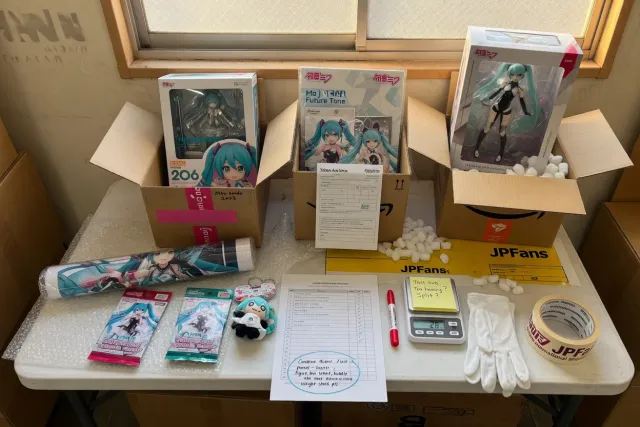
To consolidate Hatsune Miku orders for shipping, place items from supported Japanese stores through JPFinds, allow your purchases to reach the warehouse, then select the items you want combined into one outgoing parcel. The key is balancing fewer shipping charges against parcel size, weight, packaging needs, and the value of the collectibles inside.
Why consolidate Hatsune Miku orders?
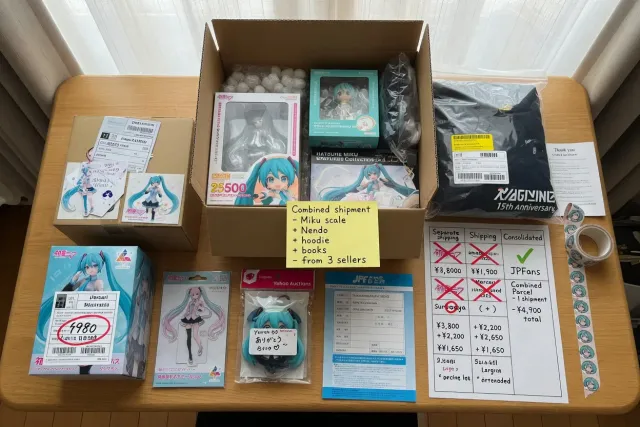
Hatsune Miku collecting often involves several categories at once: scale figures, prize figures, Nendoroids, acrylic stands, plushies, CDs, art books, keychains, apparel, and event-exclusive goods. These may come from different sellers and storefronts, so sending every purchase separately can create repeated international shipping charges and multiple import transactions.
Consolidation means grouping eligible purchases into a single shipment or into a smaller number of deliberately planned parcels. Instead of paying for separate cartons for a figure, a plush, and a set of acrylic goods, you can have them packed together where practical.
For collectors browsing the Hatsune Miku collection hub, consolidation is especially useful when listings are spread across Mercari, JDirectItems/Yahoo Auctions, Amazon Japan, Surugaya, and Minne. One order may be a sealed figure, another may be a used music release, and another may be fan-made accessories. Combining them gives you more control over when and how your collection leaves Japan.
- Fewer outgoing parcels: Potentially reduces repeated base shipping and handling charges.
- More efficient use of carton space: Small goods can often travel alongside suitably packed larger items.
- Simpler delivery planning: You can choose shipping methods for a group of purchases rather than deciding item by item.
- Better collection management: Waiting for a complete themed set can be easier than tracking many separate packages.
Consolidation is not automatically the cheapest choice in every situation. International shipping is affected by actual weight, dimensions, volumetric weight, destination, carrier rules, and the final carton. A large lightweight plush or oversized figure box can make one combined parcel less efficient than two smaller shipments.
Plan your Hatsune Miku purchases before consolidation
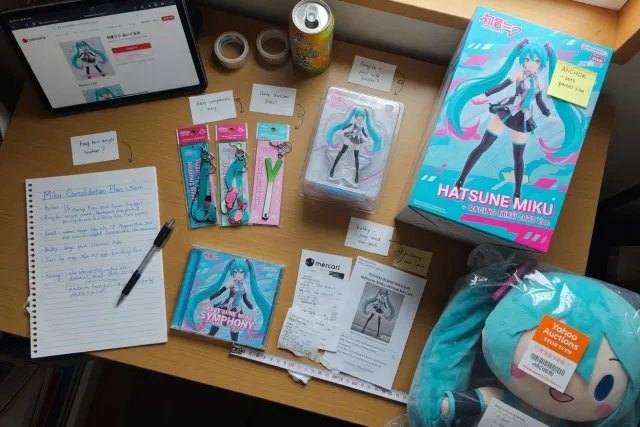
The best consolidation decisions start before you place bids or orders. Make a short list of what you are collecting and how fragile or bulky each item is likely to be. This is particularly important with Miku merchandise because package dimensions can vary dramatically even within the same product line.
Sort items by size, shape, and fragility
A compact CD, rubber strap, or acrylic stand usually adds little volume. A 1/7 scale figure, oversized plush, framed print, or large limited-edition box may determine the entire parcel’s dimensions. Treat the largest item as the likely ·anchor· of the shipment, then consider which smaller goods can reasonably accompany it.
- Easy companions: Keychains, badges, trading cards, clear files, small acrylic stands, CDs, and compact character goods.
- Items needing space awareness: Nendoroids, prize figures, model kits, and boxed plushies.
- Items best planned carefully: Large scale figures, delicate resin items, framed goods, long posters, and bulky apparel bundles.
Original retail boxes matter to many collectors. If preserving a figure’s box is important to you, plan for that box to retain its shape in transit. A package that is tightly filled may appear space-efficient, but it can be a poor match for collectible packaging that needs protective room around it.
Consider listing condition and included parts
When buying collectible goods, read Japanese listing details closely. 未開封 generally indicates unopened, 美品 generally means an item is described as being in good condition, and 初版 means first edition. These terms describe the listing or edition, not a universal guarantee of condition. Photos, seller notes, included accessories, and any stated box wear remain important.
For consolidation, condition affects packing priorities. A used figure with a worn retail box and a mint, unopened limited figure do not necessarily need the same handling plan. Grouping purchases with similar packaging sensitivity can make your shipment easier to organize.
How the JPFinds two-payment process fits consolidation
JPFinds uses a two-payment structure: first, you pay the costs associated with purchasing the item; later, once your selected items are ready to ship internationally, you pay the shipping-related charges for the outgoing parcel. This structure is useful for consolidation because the final international shipping cost depends on the shipment you actually choose to create.
In practical terms, you can acquire a Miku figure from one source, a CD from another, and several small goods from additional listings. Once those purchases are available together, you can decide whether they should leave Japan in one parcel, in themed groups, or separately.
Do not assume the initial item-payment stage tells you the exact final shipping total. The outgoing total depends on factors that become clear only after the items, packing arrangement, selected carrier option, parcel dimensions, and destination are considered. Keeping a shipping budget separate from your item budget is a sensible habit.
A collector might use this approach in three stages:
- Purchase a desired figure while the listing is available.
- Continue collecting compatible smaller goods, such as albums, charms, and acrylic items.
- Consolidate once the group is complete enough to justify an international shipment.
This does not mean every order should wait indefinitely. Storage availability, personal budget, seasonal buying patterns, and the number of arriving purchases can all influence when it makes sense to ship.
Choose which Hatsune Miku items should ship together
A useful rule is to consolidate by compatibility rather than simply by character. All of your purchases may feature Hatsune Miku, but a large plush, several boxed figures, and a thin art print do not necessarily belong in the same parcel.
A practical grouping method
Start by dividing your orders into three groups: rigid boxed collectibles, soft or flexible goods, and flat paper goods. Then identify items that can travel safely within the available space around the largest boxed item.
- Boxed collectible parcel: Scale figures, Nendoroids, prize figures, and other sturdy boxed items with compatible dimensions.
- Small-goods parcel: Acrylic stands, keychains, badges, straps, stationery, CDs, and similarly compact purchases.
- Flat-goods parcel: Books, magazines, art prints, clear files, and other items that benefit from staying flat.
- Bulky parcel: Large plushies, apparel bundles, oversized display items, or goods with unusually shaped packaging.
These groups are planning tools, not rigid rules. A small CD may fit well into a figure shipment, while a thin clear file may be better kept separate from heavy boxes. The objective is to avoid preventable pressure, bending, or wasted volume.
If you are building a display around a particular release, you may also consolidate by collection goal: for example, one shipment for a Snow Miku set, one for concert merchandise, and one for standard figures. This can simplify unpacking and help you keep track of what belongs to each collection theme.
Compare shipping options after your parcel is planned
Once you know what you want to combine, compare the available international shipping options for your destination. JPFinds offers multiple carrier options, and the most suitable choice can change according to parcel size, weight, destination, tracking preferences, and the type of items being shipped.
For collectible orders, do not compare only the lowest displayed price. Consider the full shipping profile:
- Whether the carrier accepts the parcel’s dimensions and weight.
- How the option suits your destination and local import process.
- Whether tracking is important for the value of the shipment.
- Whether the parcel contains goods that are awkwardly shaped or relatively fragile.
- Whether splitting the order would place both parcels into more favorable size or weight ranges.
Volumetric weight is especially relevant for Miku merchandise. A lightweight but large figure box may be billed by its dimensions rather than by the number on a scale. In that case, adding several small, dense items may be efficient if they fit safely; adding another large box may push the shipment into a less favorable size tier.
For a clearer shopping workflow, return to the Hatsune Miku listings on JPFinds and note likely package size as you browse. You will not know the final packed dimensions from a product photo alone, but noticing whether an item is a large scale figure, plush, or flat print helps you plan ahead.
Know when not to consolidate everything
·One parcel· is not always the same as ·best parcel.· Splitting an order can be sensible when the combined shipment becomes too large, when items need different packing approaches, or when the contents create an inefficient mix of shapes and weights.
Consider separate shipments in these situations:
- A large plush or oversized box would dominate the carton and leave little useful space.
- Flat paper goods could be exposed to bending pressure from heavy figures.
- Several high-value boxed figures require more room than one carton can comfortably provide.
- You want to send compact goods now but are still waiting to collect additional figures.
- A combined parcel may exceed a carrier’s dimensional or weight limits for your destination.
Splitting can also be useful for customs planning. Import rules, taxes, duties, and declaration requirements vary by country or region. Check your local regulations and keep records of purchases, as the recipient is generally responsible for applicable import charges.
A balanced approach is often best: consolidate naturally compatible items, but do not force every purchase into the same box merely to reduce the number of shipments.
Use a simple consolidation checklist before shipping
Before finalizing an outgoing shipment, review the items as a collection rather than as isolated purchases. This small check can prevent the most common planning mistakes.
- List every item: Confirm the figure, accessory, CD, plush, or printed item you intended to include is available.
- Identify the largest box: Use it to estimate whether the rest of the group is realistically compatible.
- Protect collector priorities: Decide whether preserving retail boxes or keeping flat goods unbent is especially important.
- Compare parcel scenarios: One combined parcel versus two logical groups can produce very different dimensions and prices.
- Review destination rules: Consider local import requirements and the carrier options available to you.
- Keep a budget buffer: International shipping is calculated from the eventual shipment, not just the merchandise price.
For example, if you have one boxed Miku scale figure, two Nendoroids, three CDs, six acrylic stands, and a large plush, a reasonable starting point may be a figure-and-small-goods parcel plus a separate plush parcel. If the plush is compact and the figure carton has suitable unused space, combining may still be possible; if not, separating it can avoid an unnecessarily oversized main box.
Related guides: Browse current Hatsune Miku merchandise when you are ready to add items to your next consolidated shipment.