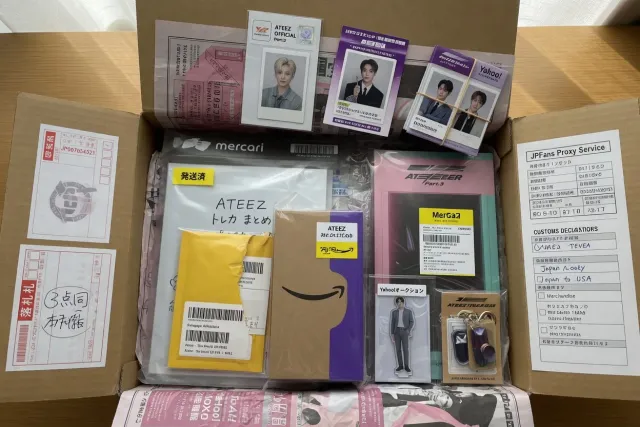
Yes, you can combine multiple ATEEZ orders by purchasing items separately, having them sent to your JPFinds account, and requesting consolidation before international shipping. This is useful for collectors buying albums, photocards, merchandise, fan-club items, and limited releases from different Japanese sellers. Planning order timing, package size, and your final shipping method can help make one combined shipment more practical.
What it means to combine multiple ATEEZ orders
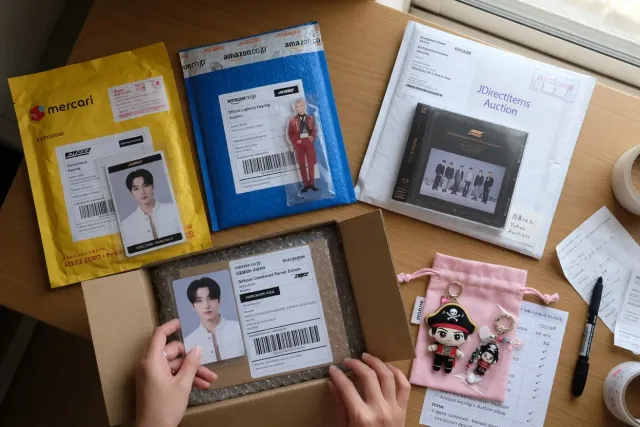
Combining orders means grouping eligible purchases that have arrived for you in Japan into one outbound parcel instead of sending each purchase internationally on its own. Your ATEEZ items may come from different sources, arrive on different dates, and have different original packaging, but they can be prepared together for a single international shipment when they are all available in your account.
This is especially useful for an ATEEZ collection because Japanese listings are often spread across multiple platforms. You might find a member photocard on Mercari, an older album edition through JDirectItems Auction, official goods on Amazon Japan, and character or fan-made accessories on Minne. Rather than treating every find as a separate overseas parcel, you can place orders as you discover them and combine them later.
Browse current ATEEZ listings from Japan to compare the kinds of items available across supported stores and marketplaces. Live listings can change quickly, particularly for member-specific goods, concert merchandise, and limited editions, so purchasing separately when you find the right item can be more realistic than waiting to locate everything from one seller.
Consolidation does not mean that all purchases become one seller order. Each seller transaction remains separate during the buying stage. The combination happens after the individual orders have reached the Japan-side delivery stage and are ready to be sent internationally.
When combining ATEEZ purchases makes sense
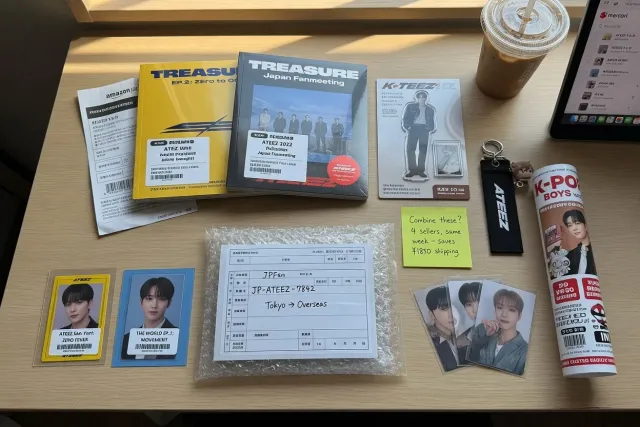
Combined shipping is most helpful when your purchases are small or medium-sized and you expect to make several orders within a similar period. A single photocard, acrylic stand, keyring, album, trading-card set, or magazine may not seem substantial by itself, but several items together can make more efficient use of an international parcel.
Good situations for consolidation
- Photocard collecting: You are buying several cards from different sellers, perhaps across multiple members, eras, or Japanese release benefits.
- Album bundles: You find different editions or store benefits separately and want them sent in one parcel.
- Tour and pop-up merchandise: You are collecting smaller goods such as badges, trading cards, towels, charms, acrylic items, or postcards.
- Mixed-source shopping: You have purchases from Mercari, JDirectItems/Yahoo Auctions, Amazon Japan, Surugaya, or Minne that you would prefer to receive together.
- One planned international shipment: You want to finish a collecting round before selecting an outbound carrier and paying for overseas shipping.
Consolidation may be less suitable if you need one particular item sent out as soon as possible, if the combined parcel becomes unusually large, or if one fragile collectible needs very different packing considerations from the rest of the order. It is worth considering the complete group of items, not just the postage of each individual item.
For example, a collector might purchase three sealed album editions, eight photocards, two acrylic stands, and a small official pouch from four sellers. Sending each order separately would create several international shipments. Combining them allows the collector to choose one shipping method for the full group, while understanding that the final parcel’s weight, dimensions, destination, and carrier rules will affect the international charge.
How the two-payment system works with combined orders
JPFinds uses a two-payment system, which is particularly helpful when you are building a multi-order ATEEZ shipment. The first payment is connected to purchasing the item from the Japanese seller. The second payment is made when you are ready to arrange international shipping after your purchases are available to ship.
In practical terms, this separates the buying decision from the international delivery decision. You do not need to know the exact final outbound parcel size at the moment you buy your first photocard or album. Instead, you can make purchases as listings become available, then decide which received orders to combine once your collection round is complete.
First payment: securing each item
Your initial payment covers the costs associated with placing that specific Japanese order, such as the item price and applicable Japan-side charges shown for the transaction. Because sellers and platforms vary, the total can differ from listing to listing. A marketplace seller may charge domestic postage, while an item from a retailer may have a different checkout structure.
This is why it is sensible to review each listing carefully before placing an order. For collectible goods, check the listed condition and included contents. Terms such as 未開封 (unopened), 美品 (item described as being in beautiful condition), and 初版 (first edition/first printing) can matter to collectors, but always read the seller’s full description and look closely at the listing photos where available.
Second payment: choosing international shipment
After the orders you want to send together are available, you can request consolidation and select an international shipping option. The second payment reflects the outbound shipment rather than the original purchases themselves. Its amount depends on factors such as the final packed weight, parcel dimensions, destination country, selected carrier, and any options selected for the shipment.
Keeping the payments separate gives you flexibility. You can buy a rare ATEEZ item when you see it, wait for other orders to arrive, then make a shipping choice based on the actual combined parcel rather than an estimate made at the start of your search.
How to plan several ATEEZ orders before consolidation
The best combined shipments begin with a simple plan. Before placing many orders, decide what you are collecting, what you are willing to spend, and which items can reasonably travel together. A little organization is valuable when listings come from several sellers with different dispatch schedules.
Create a collecting list
Make a short list of your priorities: specific album editions, Japanese store benefits, member photocards, lightstick accessories, concert goods, plush items, magazines, or older official releases. Then label each item as either essential, nice to have, or only worth buying if it can be included in a larger shipment.
This helps avoid a common consolidation problem: adding many low-priority purchases simply because they appear inexpensive. A low item price can still contribute to a larger parcel, especially when an item has bulky retail packaging.
Track purchase and arrival status
Orders do not necessarily arrive in the same sequence in which you placed them. One seller may dispatch quickly, while another may take longer to send an item to the Japan-side destination. Keep a basic record with the item name, source, order date, expected type of package, and whether you intend to include it in the final shipment.
- Write down whether an item is flat, fragile, oversized, or likely to have a box.
- Note if an album includes extras that you want to preserve.
- Separate purchases you may want shipped alone from those intended for your combined parcel.
- Check your account status before requesting shipment so you select only the orders that are ready.
If you are shopping across platforms, it can also help to group items by release. For instance, you may choose to combine all goods from one comeback era, or create a single shipment for an upcoming birthday-sleeve project and related member items.
Choosing items that pack well together
Not all ATEEZ merchandise has the same shipping profile. Photocards and paper goods are compact, while albums, lightsticks, framed items, apparel, and large plush goods can add considerable volume. A successful consolidation request considers both weight and dimensions.
Flat goods often pair well with albums and small merchandise, provided they are appropriately protected within the final parcel. Larger boxed items can be the deciding factor in whether a combined shipment remains practical. Several lightweight but bulky goods may cost more to ship than a smaller, heavier collection because carriers may use dimensional measurements in their pricing.
Examples of practical combinations
- Compact collector parcel: Photocards, postcards, trading cards, small acrylic items, and a few badges.
- Album-focused parcel: Several albums, store bonus cards, lyric books, and small official goods.
- Mixed merchandise parcel: A towel, apparel, keychains, acrylic stands, and albums, as long as the total size remains manageable.
Consider keeping unusually large, delicate, or oddly shaped items separate when they could force the entire shipment into a much larger parcel category. Likewise, if you are purchasing a collectible with original outer packaging that matters to you, include that preference in your planning rather than assuming every item should be handled identically.
You can return to the ATEEZ shopping hub as you build your list, especially when you want to compare compact collectibles with larger merchandise before committing to a combined parcel.
Requesting consolidation and selecting a shipping option
Once the ATEEZ orders you want to send are available in your JPFinds account, select the relevant orders and request that they be consolidated for international shipping. Review the selections carefully: this is the point to confirm that you are grouping the intended items and leaving out anything you would rather hold for a future shipment.
After consolidation is arranged, choose from the available international carrier options for your destination. Carrier availability, size limits, and pricing can vary by country and parcel characteristics. Compare the options shown for your shipment rather than assuming that one carrier is always the best choice for every order.
Your priorities may differ depending on the collection:
- Choose based on the available cost for the combined parcel if you are consolidating many small goods.
- Review size compatibility if the shipment contains albums, apparel, or boxed merchandise.
- Consider tracking and service features available for your destination.
- Check import rules, taxes, and customs requirements in your country before completing the second payment.
Be accurate when providing shipment information. International parcels may be subject to customs procedures in the destination country, and local duties, taxes, or handling charges can be assessed independently of the purchase and shipping payments. These rules are set by customs authorities, not by the original seller.
Common mistakes when combining ATEEZ orders
Consolidation is straightforward, but a few planning errors can make a shipment less convenient or more expensive than expected. Avoiding them helps you make better decisions as your collection grows.
- Waiting too long to buy a scarce listing: A rare photocard or discontinued item can sell before the rest of your list is complete. Buy the listing when it fits your budget, then consolidate later.
- Ignoring package volume: A set of large boxes can change the shipping profile more than several albums or cards.
- Combining items with different priorities: Do not add an item intended for a later collection batch just because it is already available, unless you are comfortable sending it now.
- Assuming every seller’s condition language means the same thing: Review item-specific details, photos, and included accessories before purchase.
- Forgetting destination-country charges: International shipping is only one part of the total cost; customs-related charges may apply after dispatch depending on local regulations.
- Choosing a carrier before the parcel is known: It is better to compare available options once the combined shipment’s characteristics are established.
The most reliable approach is to treat consolidation as a final shipping decision, not as a reason to buy without a plan. Choose ATEEZ items you genuinely want, keep track of which orders are intended to travel together, and make your outbound shipping choice after the group is ready.
Building a repeatable ATEEZ consolidation routine
If you collect ATEEZ regularly, a repeatable routine can make multi-order shopping easier. Set a collecting window, purchase priority items as they appear, and decide when you will close that window and request a shipment. Some collectors use one shipment per comeback, season, concert period, or set budget.
For example, you could start with a shortlist of Japanese release items, add member-specific photocards only when they meet your target price, and finish with official merchandise that fits the remaining budget. Once the selected orders are available, consolidate the group and compare the shipping options presented for your destination.
This method keeps your collection organized while preserving the main advantage of a shopping proxy: access to separate Japanese listings without needing every item to come from the same store or seller. It also gives you a clearer record of what you bought, what you are still seeking, and what belongs in the next parcel.
For more ATEEZ-specific searches, use the JPFinds hub to explore listings by product type, era, member name, or Japanese keywords. The most efficient combined order is usually not the largest possible order; it is the one that matches your budget, collecting priorities, and preferred shipping plan.