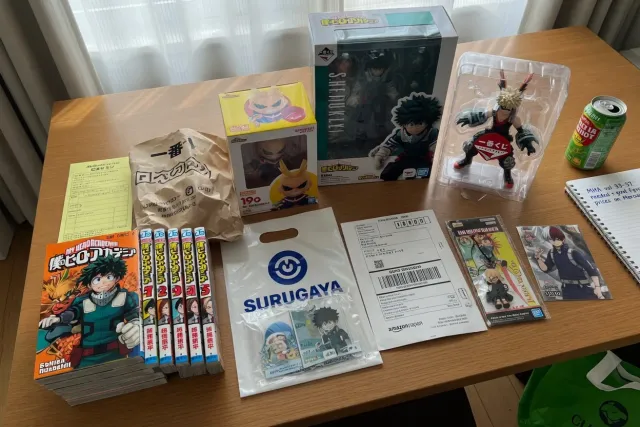
Buying My Hero Academia manga, figures, and merch from Japan is a great way to find Japanese-language editions, event items, prize figures, character goods, and older releases that may be difficult to locate elsewhere. Start by deciding what you collect, compare listing photos and condition terms, then use a shopping proxy to buy from Japanese stores and marketplaces and combine eligible purchases for international shipping.
Choose What Kind of My Hero Academia Collection You Want
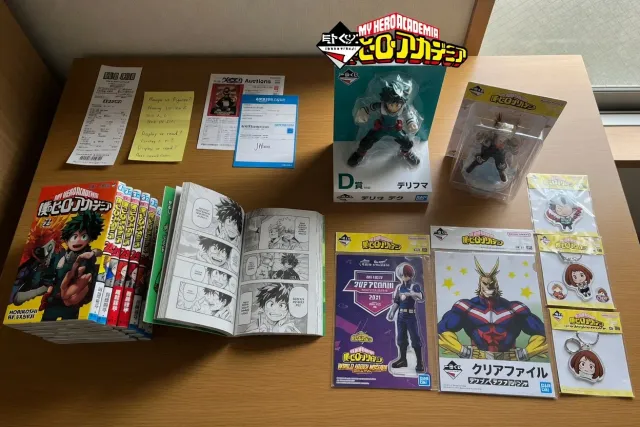
My Hero Academia has a very broad merchandise range, so a focused collecting plan makes searching easier and helps prevent duplicate purchases. You might collect the manga itself, scale figures of a favorite character, affordable prize figures, acrylic stands from a specific event, or everyday goods such as clear files and keychains.
A useful first decision is whether you want items primarily for reading, display, fandom, or long-term completeness. Those goals affect where you search, what condition you accept, and how much space you need.
Manga and books
Japanese manga is commonly sold as individual tankobon volumes. The Japanese edition reads right to left and is ideal for collectors who want the original cover designs, publisher obi strips, bonuses, or an authentic Japanese bookshelf display. Used volumes are widely available in Japan, often in readable condition at modest prices.
Look beyond standard manga volumes if you want a deeper collection:
- Volume sets: Convenient for starting a full run, though photos should be checked for matching editions and overall wear.
- First-print copies: Listings may use 初版 (shohan, first edition/first printing). This matters most to collectors who specifically value early printings.
- Obi strips: The removable paper band around a Japanese book can be important for presentation, but it is often missing from used copies.
- Official guidebooks and fan books: These can include character profiles, concept information, illustrations, or special features.
- Magazine issues: Japanese weekly magazines and special publications may appeal to collectors looking for cover art or publication-era memorabilia.
Figures for every budget and display size
Figures range from compact crane-game prizes to detailed scale statues. Prize figures are typically made for Japanese arcade and lottery distribution, making them an accessible way to build a large character display. Scale figures usually have more elaborate sculpting, paintwork, bases, and packaging, but also require more budget and shelf space.
For My Hero Academia, common figure lines can include pose-focused prize releases, articulated figures, chibi designs, lottery prizes, and premium character statues. Search using both the character name and the figure line when possible. For example, adding terms such as ·figure,· ·prize,· ·scale,· ·lottery,· or ·acrylic stand· can narrow a broad character search substantially.
Know Which Japanese Listings Are Best for Each Item
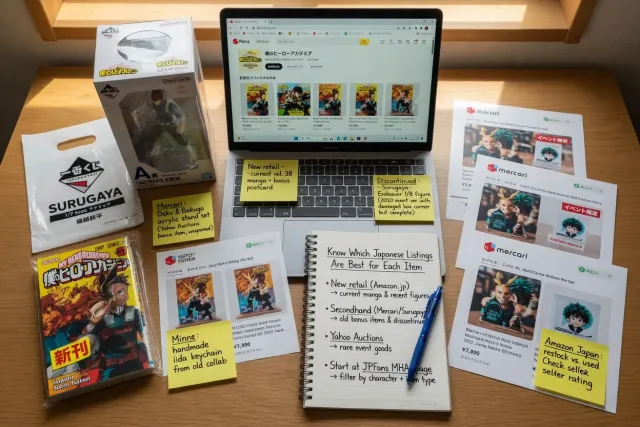
Japan’s retail and resale ecosystem gives collectors several ways to find My Hero Academia items. New retail listings can be useful for current releases, while secondhand marketplaces are especially valuable for discontinued figures, older bonus items, and sold-out event goods.
JPFinds brings together live listings from services such as Mercari, JDirectItems/Yahoo Auctions, Amazon Japan, Surugaya, and Minne, allowing international shoppers to compare different sources in one place. Begin with the dedicated My Hero Academia collection page for a broad view of available goods, then refine searches by character, item type, brand, or release line.
When to use marketplace listings
Peer-to-peer listings can be excellent for single volumes, older character goods, bonus cards, limited-release acrylic stands, and opened figures. They also reward careful reading: the seller’s photos and description are often the best source for confirming exactly what is included.
For auctions, decide your maximum total before bidding. Consider the item cost, any local fees shown during checkout, and later international shipping. A low starting price does not always mean the final auction price will remain low, particularly for popular characters, limited goods, or complete sets.
When to use secondhand stores and retail listings
Secondhand retailers are often practical for collectors who want clearly categorized inventory, especially books, figures, and character goods. New retail listings can be better for currently available merchandise, pre-order items, and releases where sealed packaging is especially important to you.
Do not assume that ·used· means poor quality. Japanese secondhand stock frequently includes items that were displayed briefly, opened only to verify contents, or stored by collectors. The key is to judge the individual listing rather than the category alone.
Search Like a Japanese Collector
English searches can return useful results, but Japanese keywords usually reveal more listings. Copying a character’s Japanese name, the Japanese series title, or a manufacturer’s product name can uncover merchandise that does not have a full English description.
Useful search combinations include the series title plus a character name, followed by the item type. Once you find a product you like, copy distinctive words from its Japanese listing title to locate similar versions, alternate sellers, or related releases.
- Search the series title plus フィギュア for figures.
- Add アクリルスタンド for acrylic stands.
- Add 缶バッジ for can badges or pin-style character badges.
- Add クリアファイル for clear files.
- Add ぬいぐるみ for plush items.
- Add 全巻セット when looking for a complete manga set.
Auto-translation helps make Japanese listings easier to understand, but product names, condition notes, and abbreviations can still be nuanced. Compare the translated text with the photos, especially when an item is expensive or described as limited. A listing title may contain search terms that do not represent what is actually included.
Check Condition, Completeness, and Authenticity Before Buying
Condition is one of the most important factors when buying collectible goods. Listing photos should be treated as part of the description. Look at the item itself, its box or packaging, included accessories, and any close-up images of flaws.
Common Japanese condition terms
- 未開封: Unopened. For figures, this usually means the product package has not been opened, though outer box wear may still exist.
- 美品: Literally ·beautiful item· or very good condition. It is subjective, so always review photographs and notes.
- 中古: Used or pre-owned. This can cover anything from lightly handled to visibly worn.
- 箱なし: No box. This can lower the price of a figure but may matter for display, storage, or collector preference.
- 欠品: Missing item or missing part. Check whether a base, alternate face, effect part, card, or bonus is absent.
For manga, look for yellowing, stains, writing, bent corners, loose covers, library markings, and smoke odors where described. Minor shelf wear is common in used books and may be perfectly acceptable for readers. If you are collecting a matching display set, compare spine colors and trim heights; volumes from different print runs can look slightly different together.
For figures, confirm whether the figure is official, whether its base and accessories are present, and whether photos show the actual item rather than only a promotional image. Branded packaging, manufacturer marks, consistent paint application, and a complete accessory list are all useful signals. Be particularly cautious with unusually cheap listings for high-demand premium figures or listings with vague photos.
For background on official English-language manga publishing, consult VIZ Media, an official publisher of manga and related media. Publisher and manufacturer information can help you identify legitimate product lines, though the exact Japanese release may differ from an overseas edition.
Buy Manga, Figures, and Merch Through JPFinds
Once you have selected an item, review the listing title, price, photos, condition, and any seller notes before placing an order. With a proxy purchase, JPFinds purchases eligible items from Japanese sources on your behalf, making listings that normally cater to domestic buyers more accessible internationally.
The service uses a two-payment system. The first payment covers the item purchase and applicable purchasing costs. After your purchases are ready for shipment, you select an international shipping method and make the second payment for shipping. This approach is useful when you are buying several items over time and want to send them together rather than paying international postage separately for every purchase.
Use consolidation strategically
Consolidation is especially useful for My Hero Academia collecting because many character goods are lightweight but individually inefficient to ship. Acrylic stands, badges, keychains, small plush, manga volumes, and flat paper goods can often make more sense as part of one combined shipment.
Figures require more planning. Large boxes, delicate bases, and bulky packaging can increase parcel size. If the original box matters to you, account for its dimensions before buying multiple large figures at once. A collector who wants the figure only may have different priorities from one who wants a sealed, display-worthy retail box.
When you are ready to browse, return to the My Hero Academia hub and compare listings rather than purchasing the first result. Small differences in condition, included bonuses, packaging, and seller photos can make one listing much better value than another.
Build a Collection That Is Easy to Enjoy and Maintain
The best My Hero Academia collection is not necessarily the largest one. A well-defined theme can make your display more personal and easier to manage. You might focus on one character, a specific school class, a particular costume era, a favorite illustrator’s merchandise, or a single format such as prize figures or manga first printings.
Keep a simple inventory with the item name, release line, purchase price, condition, and whether the original packaging is included. This is helpful when buying repeat character goods, tracking a manga run, or planning a display. Taking your own photos when items arrive can also help you organize a growing collection.
For books, avoid direct sunlight and humid locations. Store figures away from sustained heat and strong light, which can affect plastics and paint over time. Keep small accessories, bonus parts, and manga obi strips in labeled sleeves or containers. If you display acrylic goods, leave enough space between pieces to avoid scratches.
Finally, shop with patience. Japanese resale listings change constantly, and a rare-looking item is not always the only copy that will appear. Save your preferred search terms, compare condition carefully, and prioritize items that genuinely fit your collection goals.
Related guide: Visit the My Hero Academia shopping hub to explore current listings and character goods.